
Maja Novaković – Director Introduction + Interview
Director Introduction
PIERRE ALBERT-BIROT
“Les Amusements Naturels”, p.2/7
At the door of the house who will come knocking? An open door, we enter
A closed door, a den
The world pulse beats beyond my door.
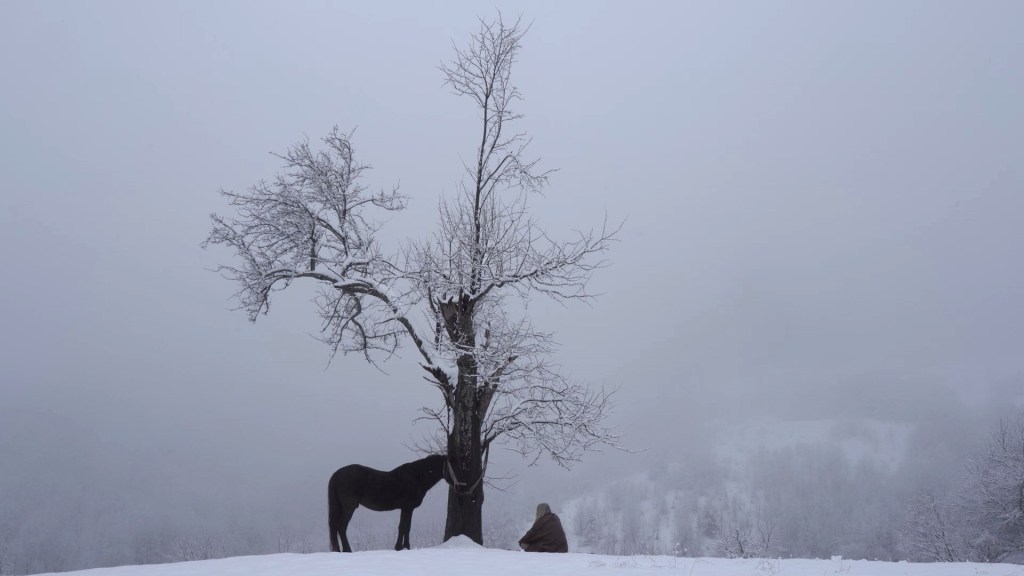
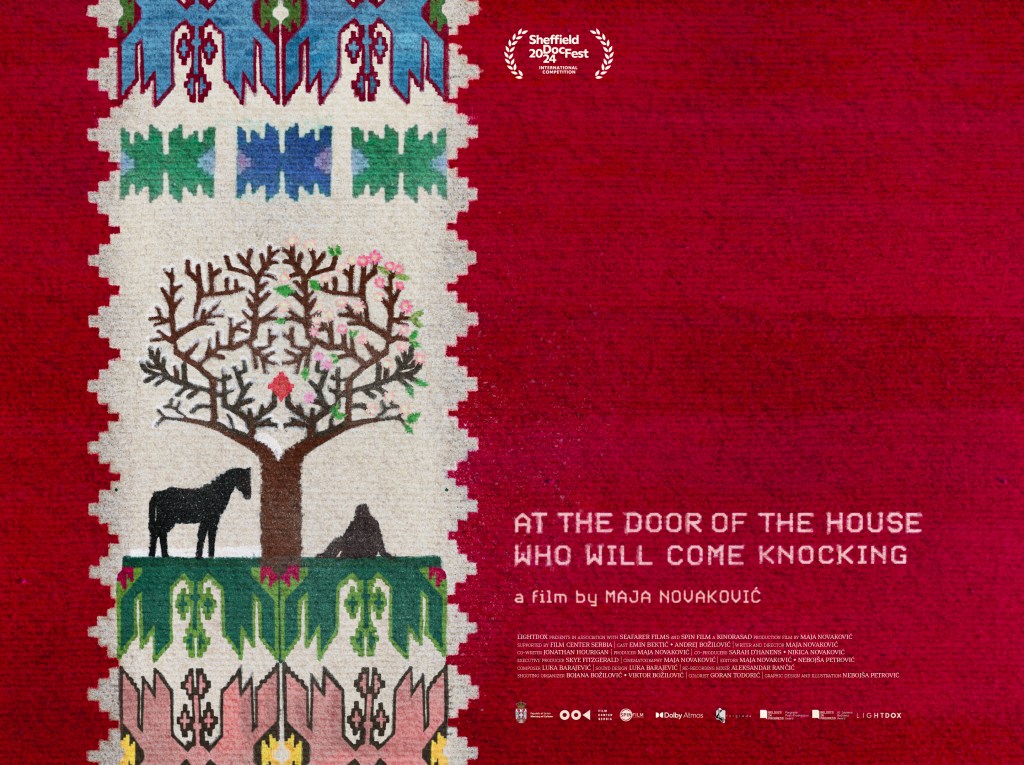
At the Door of the House Who Will Come Knocking is my first feature film and it was shot near the village I come from. I first met the protagonist Emin (78) 20 years ago following a photography exhibition at a high school in Srebrenica, where I displayed a photo of a horse I took in a nearby forest. Ever since we met, I had a feeling of knowing him and understanding his reasons for returning to his village in the mountains, forest, and horses, after working 30 years as a miner in Germany.
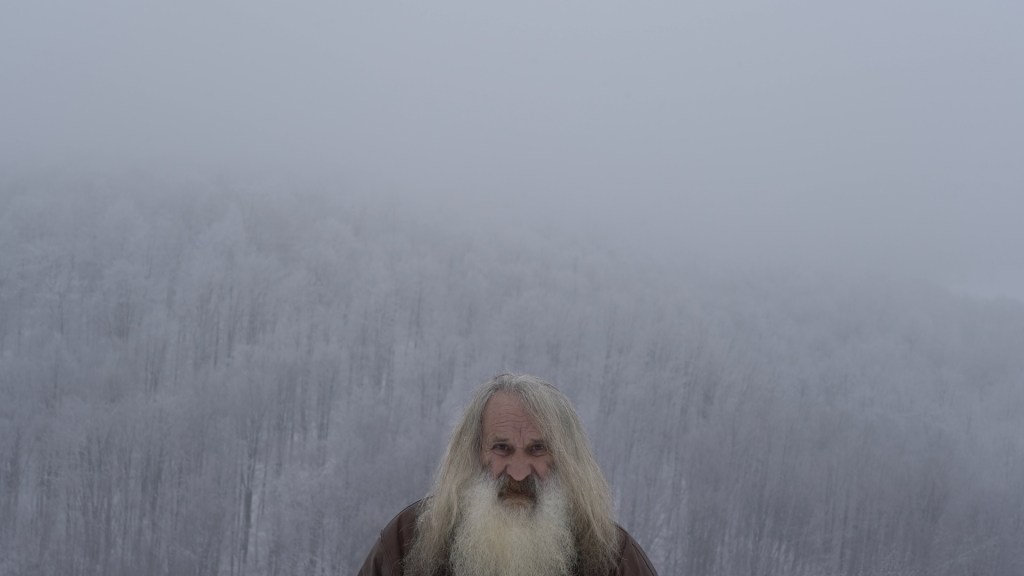
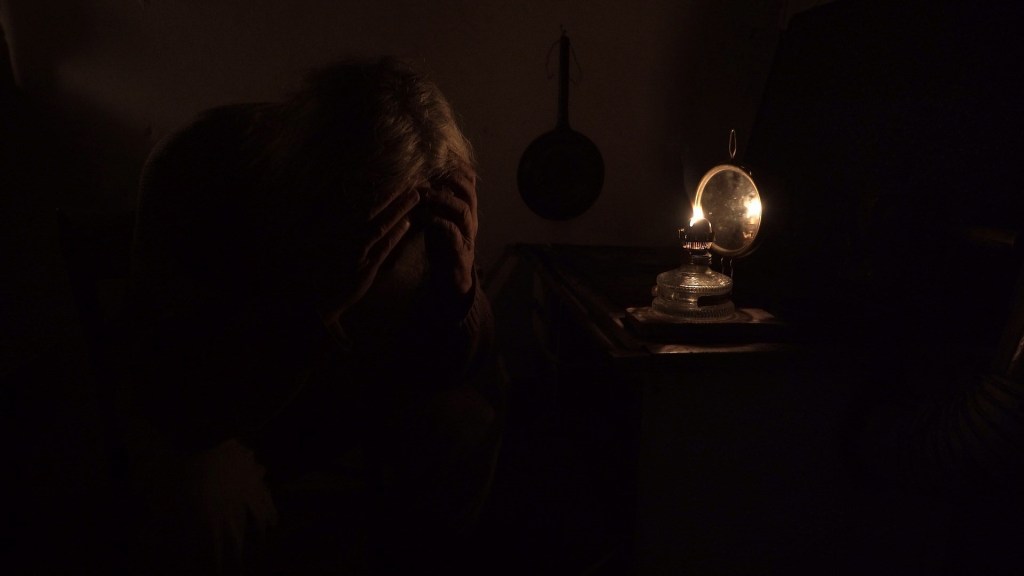
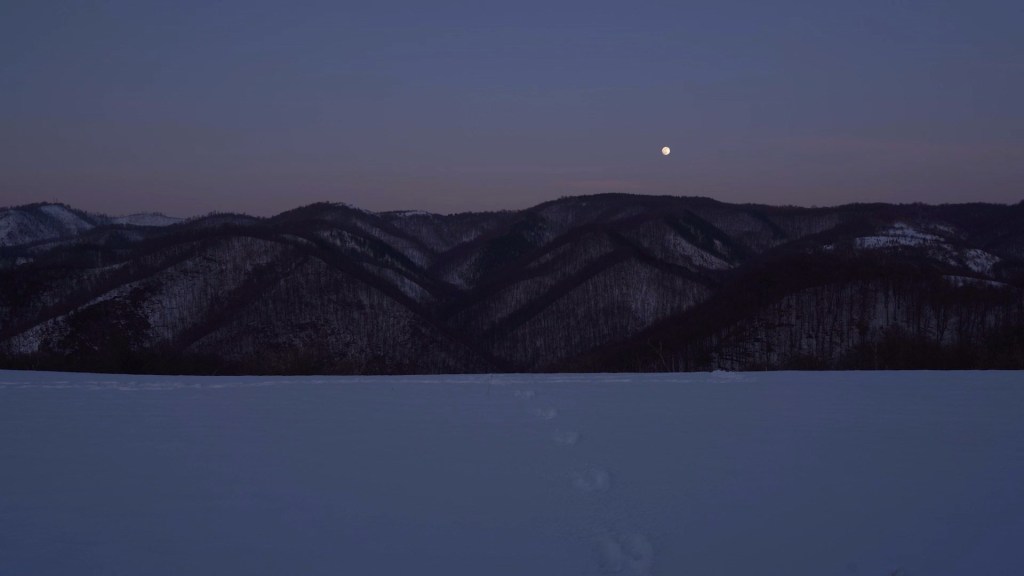
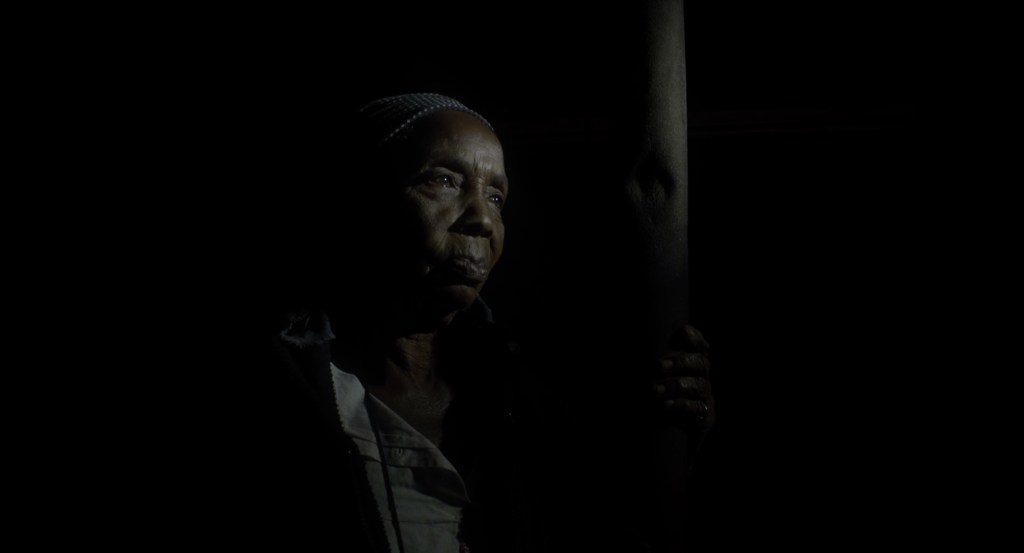
Emin hasn’t cut his hair or beard since he lost his brother, a hairdresser, in a forestry accident in the 1970s. As he says, he grabs the hair and the beard and cuts off what annoys him. He wanders through the cold landscapes to soothe his grief. In horses, he found solace – he wrote them poems and built monuments when they died. I wanted to portray his silence and the inner world dominated by loss and grief. Those are close to me as I grew up watching people in pain and hopelessness. Therefore, I dare to work with this subject, visualizing it. I use landscapes and nature to describe the human condition: Emin’s feelings are shown as a “psychological landscape”. The image of nature is presented as a state of the soul, and we see nature as a living being and feel it as it breathes. The focus is on the inner world of a man, alienation and coldness, the coldness of the landscape and human emotions. At the Door of the House Who Will Come Knocking is a film about the landscape to which we belong, a man and grief as a universal human experience that can be both isolating and unifying. It is an ode to Bosnian hills.
Interview with director Maja Novaković, by Petar Mitrić
The central character in your debut feature documentary is Emin, whose vivid appearance is full of secrets. How did you meet him, and was his life story the film’s starting point?
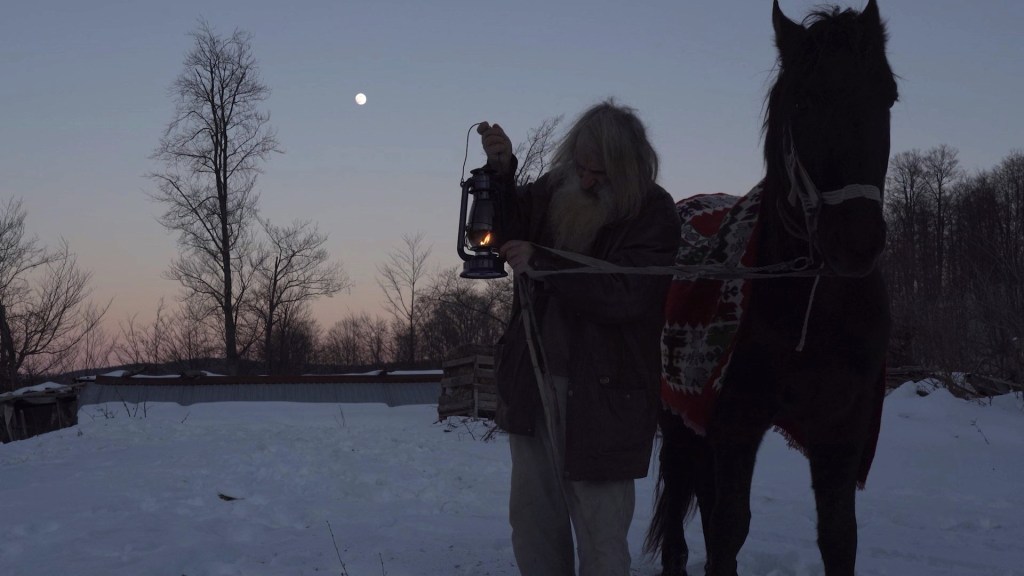
I met Emin about 20 years ago after a photography exhibition at the high school in Srebrenica. I had taken a photo of a white horse in a nearby forest, captured with a disposable photo camera obtained at the photography workshop. That was the first photo camera I ever held in my hands. Emin expressed his love for horses and his desire to purchase the photograph. Ever since we met, I’ve had a sense of knowing him and understanding his reasons for returning to his village, the forest, and his horses after working for 30 years as a miner in Germany. In horses, he found solace—he wrote poems about them and erected tombstones for those that passed. He is a folk poet who is deeply in love with nature. He shared with me how he could easily breathe the air in his homeland, and I empathized with that sentiment.
I wanted to be like him when I grew up.
The film seems like a human portrait, but you deliberately avoid giving the viewer much of Emin’s background. What stands behind these artistic decisions, and what kind of portrait did you intend to make?
My intention with this film was not to create a mere portrait of Emin but to delve deeper into his inner world. I often say that this film is not about Emin but “in” him—a portrayal of the inner struggles of a man who has experienced loss. While Emin is the subject of this instance, I believe this portrait could apply to anyone who has expe- rienced loss, making it a universal story.
When focusing on alienation and loss, mere biographical details dis- tract from more profound understanding and meaning. Delving into the inner character and refraining from superficial information is essential. For this, I needed a person I could relate to, someone who finds solace and answers in nature. I portray emotions as part of the natural world—a psychological landscape.
I was particularly intrigued by his appearance and decision not to cut his hair or shave. Emin hasn’t cut his hair or beard since the tragic loss of his brother—a hairdresser—in a forestry accident in the 1970s. As he puts it, he grabs the hair and the beard and cuts off what annoys him. This aspect became my primary focus. By avoid- ing a shallow outlook and focusing on Emin’s inner essence, I tried to avoid falling into the trap of not seeing the forest from the trees.
The film’s title quotes the verses of the avant-garde poet Pierre Albert-Birot, which strongly reflect on solitude but maybe even stronger on the metaphysical idea of home in the sense of belonging.
The inspiration for the film’s title draws from Gaston Bachelard’s “The Poetics of Space,” where he captures the essence of the mean- ing of home in a person’s life. He said: “In the life of a man, the house thrusts aside contingencies, its councils of continuity are unceasing. Without it, man would be a dispersed being. It maintains him through the storms of the heavens and through those of life. It is body and soul. It is the human being’s first world.”
At the beginning of the chapter with the above quote, there’s a verse from Pierre Alber Birot’s poem “Les Amusements Naturels” that resonates:
“At the door of the house who will come knocking? An open door, we enter
A closed door, a den
The world pulse beats beyond my door.”
This title perfectly encapsulates what I aimed to convey in the film. With Bachelard’s insights, I ventured into a man’s inner worlds and spaces. Emin’s felt familiar to me. I could feel his yearning for his homeland, Bosnia’s air, forests, and hills. Our emotions flowed like a stream, converging toward the same destination: home.
As refugees away from our homeland, Emin and I longed for the familiar air and landscape. Whenever we returned, crossing the bor- der into Bosnia, we’d breathe in the soft air of home. That home was more than a house itself; it often took the shape of a hilly landscape.
Bosnia is the cultural and natural environment you are constantly returning to. In what sense do dreamy landscapes and harsh natural environments reflect the human condition?
That’s right. Like my previous short film, this one is also set in the East Bosnian landscape. I feel the safest and most comfortable when I tell seemingly small sto- ries from an environment I know well. I know the atmosphere and spirit of the people and place. Placed in the landscape I belong to, I have the confidence to tell, analyze, and present my habitus. I can explore the dialogue between a man and his environment in this personal landscape. I wanted to tell a story about a man and his sorrow as a universal human experience that can be isolating and unifying.
I find a metaphor for our experiences in these landscapes—where comfort meets discomfort and personal and universal converge. Through this connection to the land, I find the words of the heart, telling stories that resonate deeply with the human soul.
This is an ode to the Bosnian hills.
Your previous short, THEN COMES THE EVENING, which gained enormous in- ternational success, was deeply rooted in the world of paintings. Knowing your strong background in Art History, I must ask which painters or paintings in- spired AT THE DOOR OF THE HOUSE and how you chose such a unique color palette.
The truth is, when I start developing an idea into a film, I first consider the seasons in nature. “Then Comes the Evening” was created with a vivid and colorful palette and designed as a triptych. The beginning features a green phase with impressionistic colors. The middle of the film is dominated by grey tones, representing the on- set of a storm. The final phase is orange, where colors become ripe and saturated.
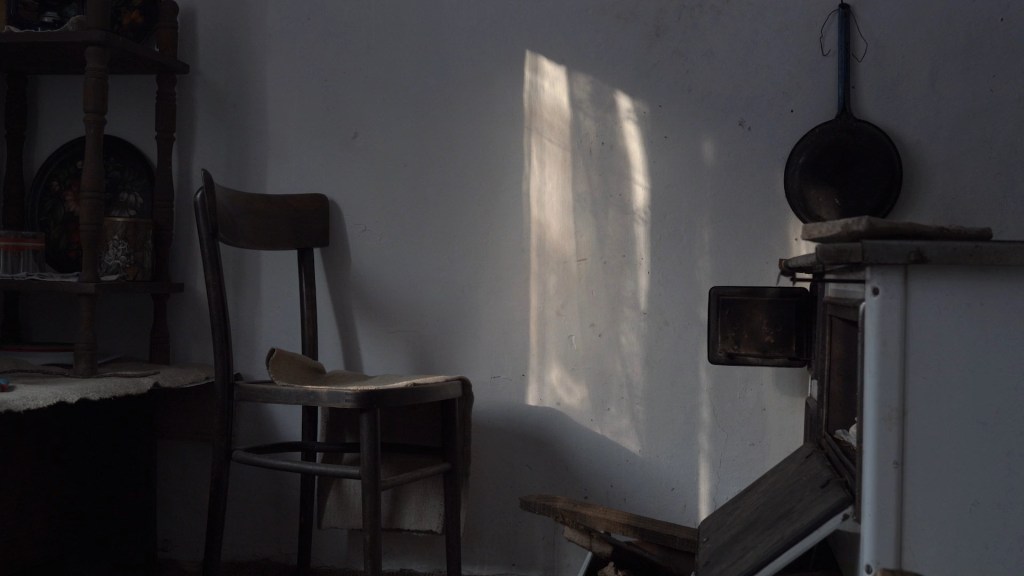
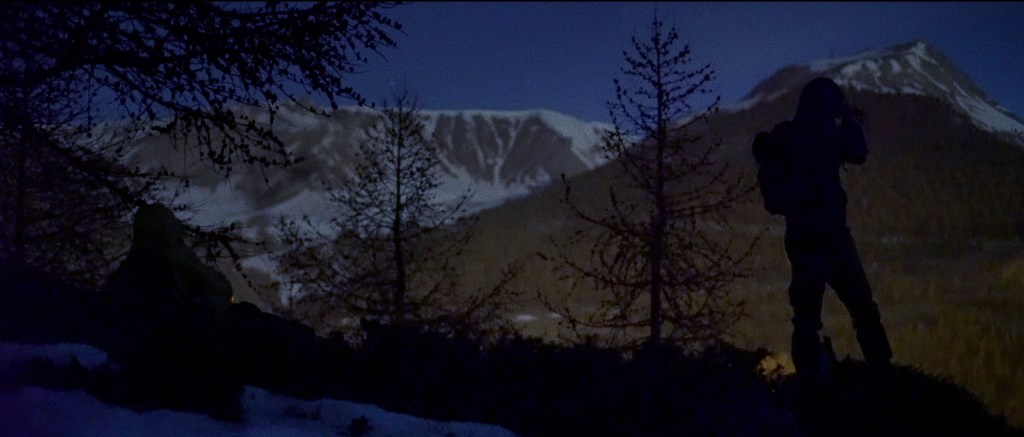
I took a similar approach to this film. From the start, I knew it would be set in a winter landscape dominated by cold, monochrome colors with stark contrasts between light and dark. These cold colors are crucial as they convey sorrow, emptiness, and isolation. When considering the choice of film camera, I considered those with a less colorful, colder color spectrum.
During the post-production phase, particularly in color grading, I was asked for movie references to help the team understand the approach and style I preferred for the film’s visuals. I paused to think of some and burst out laughing when I realized every movie that came to mind was in black and white. The next day, I returned with a couple of art monographs to illustrate my envisioned colors and lighting.
Regarding specific paintings that inspired “At the Door of the House”, I drew on several notable artists. Van Gogh’s lithograph (Sorrowing Old Man (‘At Eternity’s Gate’) 1882), depicting loneliness and sorrow, was a significant influence, and so were Rembrandt’ portraits and Caravaggio’s masterful use of light and shadow. Additionally, the winter landscapes of Serbian painter Sava Šumanović were fascinating for observing the shadows, color, and atmosphere.
In several sequences, you expose the traditional, colorful Bosnian tapes- tries with unique patterns in contrast to greyish winter landscapes.
One of my childhood’s most memorable motifs are colorful kilims, tapes- tries, and carpets. Growing up during the war and in a post-war country, we didn’t have many toys, and those colorful patterns became the world for my sisters and me. We often imagined them with flowing red lava obstacles or a blue stream where falling in meant losing the game. During my studies, I discovered the meaning of the patterns and motifs, which seemed like beautiful and meaningful details to incorporate into the film.
The carpet as a refuge represents “spring,” inspired by the symbolism of car- pets found in Iranian art and Sassanid fabrics. As Andre Godard described in “Art of Iran,” “If the Mesopotamian plain became even gloomier before winter than it usually was under the summer sun, one would settle on his famous ‘winter carpet’ and live there, in a way, and dine on it because it gave away the impression of spring. … This is where the carpet comes from: a flourishing garden, so common in Iranian literature but rare in nature, and an Eastern love of colors; a natural reaction to the desperate monotony of their landscapes.”
This symbolism provided me with many answers. I intended for the kilim shown in the film to be a motif of Emin’s, mine, and our collective spring amidst the monochrome wave of coldness that sometimes splashes into our lives. The kilim he carries around is a simulacrum of spring, holding its place until the true spring arrives and drops its balls of yarn to the ground.
In the middle of the film, you introduce a mystical boy character, and the viewer can’t be sure if he is real or surreal, especially in the se- quence where Emin and the boy are rolling the clew of thread. What was your intention with such a magical element?
I prefer to avoid explicitly indicating and underlining his meaning or what others should feel and see in his appearance. He can represent Emin’s inner child, a lost person, or even a stream or landscape that follows and wanders within us.
The meaning should be personal for each viewer. He can be a memory that grows with us, constantly changing its shape and significance. The boy, of course, holds a personal meaning for me, but I don’t want to strip the viewer of their interpretation or impression shaped by their own experience.
Even though your film deals with the bleak topics of grief and soli- tude, you don’t leave the audience with a bitter feeling. It seems like the cyclic nature of the universe always leads to spring.
That’s right; all the answers are given by nature. Their fullness and richness lie in their simplicity. The cyclicality of time, nature, and everything—our lives or an apple’s life—are central themes.
The cyclic nature of the world always leads to spring, offering a sense of renewal and hope. We could even say that the main characters in this film are Father Time and Mother Nature.









Leave a Reply