
Director’s Note – Juliette de Marcillac
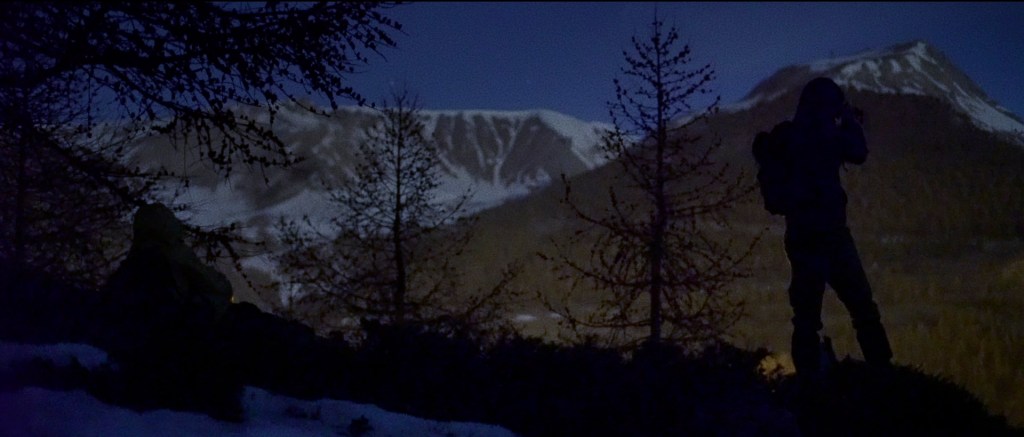
In Montgenèvre, an idyllic ski resort by day, a massive “migrant hunt” unfolds once night falls. Since 2015, the reintroduction of border controls and the heavy police presence have pushed migrants to take increasingly greater risks to try to enter France. Day and night, volunteers take turns watching for their passage in the mountains and offering them assistance. With Nightwatchers, I take the viewer along for a night patrolling the slopes with these dedicated volunteers.
The Origin of the Project
I spent all my childhood holidays in Montgenèvre, at my grandfather’s house. In the 1990s, with the Schengen Agreement, the border post seemed abandoned: we could travel from one village to another without any checks. Nevertheless, we always preferred to go through the forest. These woods, these paths, these mountains—I know them by heart. Over the years, I’ve seen the resort develop its activities to attract a more affluent clientele. I’ve also seen, since 2015 and the shift towards stricter immigration policy, the border close. To cross, you now have to show your credentials.
In 2019, I received a leaflet in my mailbox, distributed to all the villagers, informing me that on the night of February 6th to 7th, a young man had died of hypothermia by the side of the road leading down to Briançon. Tamimou Derman was 28 years old and came from Togo. That night, not a single car stopped to help him.
Suddenly, I became aware of the tragedy unfolding night after night in the mountains. I started interviewing locals and then became involved with the solidarity refuge in Briançon. During the day, I helped prepare meals, absorbed the atmosphere of the place, and met the migrants. In the evening, I joined the patrols. All it took was showing up at their headquarters to be swept up in a long night of vigil in the mountains. Very quickly, I decided to stop turning a blind eye to what was happening on the slopes and to make a documentary film to make visible the violence of crossing the border.
Several extended stays immersed in the area between 2020 and 2022 allowed me to forge bonds with those who became my subjects. I was able to integrate into the teams and gain their trust thanks to my extensive knowledge of the terrain, a key element in tense situations. Through these patrols, I managed to gain their acceptance of the presence of a camera.
A Humanitarian Emergency
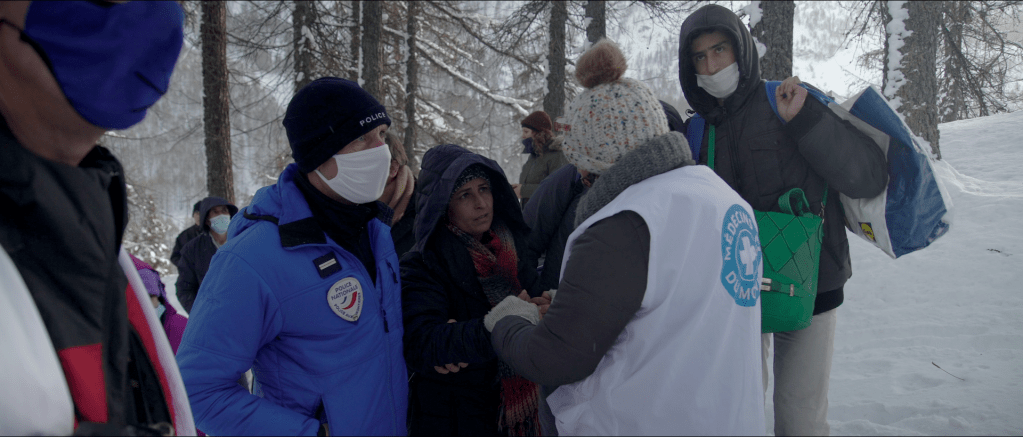
The situation at our borders is a humanitarian emergency that I feel compelled to report. At night, the mountains become a dangerous open-air prison where migrants, law enforcement officers, and smugglers find themselves face to face. In recent years, the population crossing the border has changed: it is now primarily families with pregnant women, elderly people, and children attempting to enter France. When apprehended, migrants are almost systematically returned to Italy without being given the opportunity to apply for asylum. Furthermore, the number of personnel responsible for controlling entry into France continues to increase. Mobile gendarmerie brigades are deployed one after another without being given the time to grasp the specific challenges of the Franco-Italian border. Finally, law enforcement exerts constant pressure on the patrollers, threatening them with prosecution for “aiding the entry, movement or stay of persons in an irregular situation”, even though their action has been partly legitimized by the Constitutional Council since 2018 with the recognition of the “principle of fraternity”.
The outreach volunteers
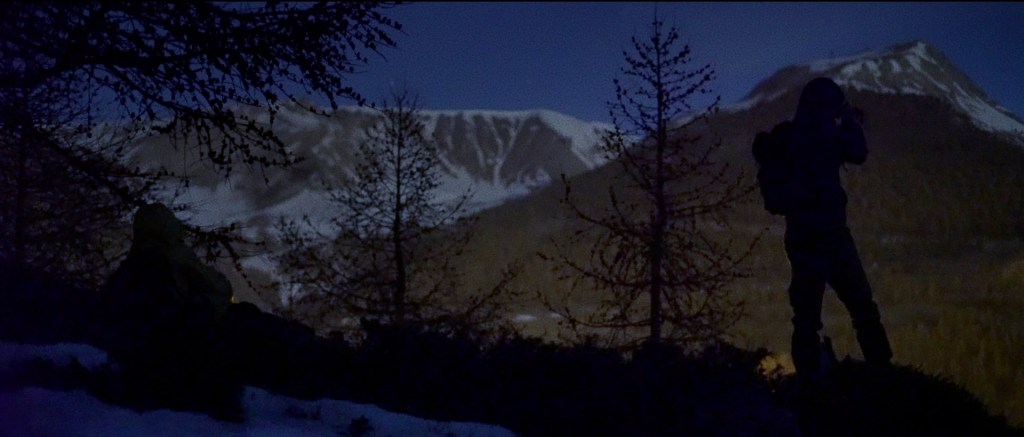
These volunteers, all convinced that fundamental human rights take precedence over migration policies, form an informal collective comprising a diverse group of people: anti-border activists, young people who have lost faith in institutions, and mountain dwellers driven by a tradition of solidarity. Their commitment moves me deeply: this outreach work represents a tangible utopia, a time and space where new forms of social connection are created. Over the past four years, I have watched the collective grow. The volunteers now coordinate with the NGO ‘Médecins du Monde’ (Doctors of the World), which deploys a “mobile shelter unit” (UMMA) to the field, staffed by a team consisting of a healthcare worker and a volunteer. When the volunteers encounter displaced people, they discreetly guide them to the UMMA, which then transports them down to the solidarity shelter in Briançon.
A Single Night of Outreach
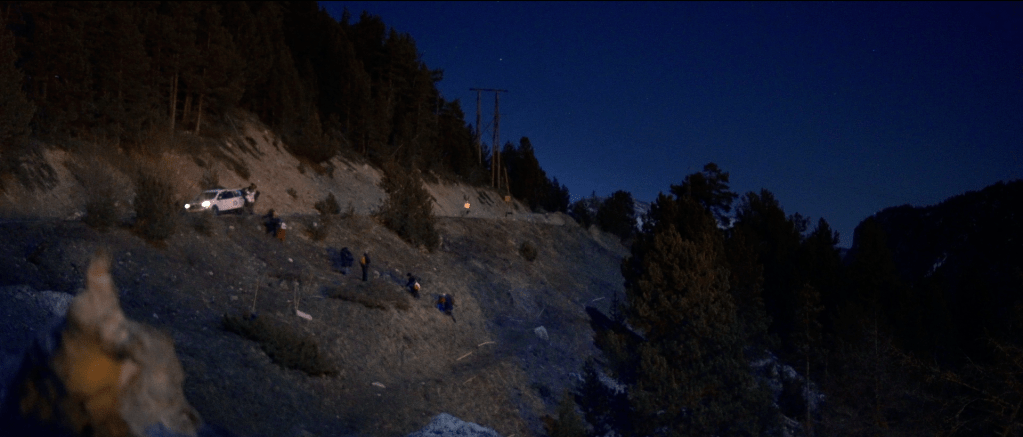
We enter the world of street outreach through a pair of young cousins who grew up in the region. Over the course of the film, we meet other characters who reflect the diversity of the volunteers: young people and retirees, healthcare workers, activists, mountain locals… In Nightwatchers, I use editing to reconstruct a single outreach run from several nights of filming. The film unfolds like a descent into the night, for it is in the darkness that the stakes intensify, and concludes as day breaks over the majestic, unchanging mountain, ready to welcome tourists for another day of skiing.
The filming setup
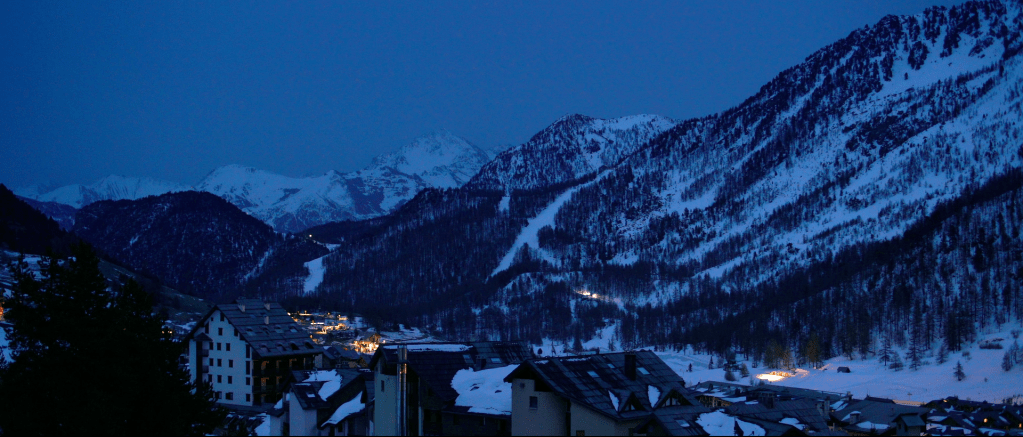
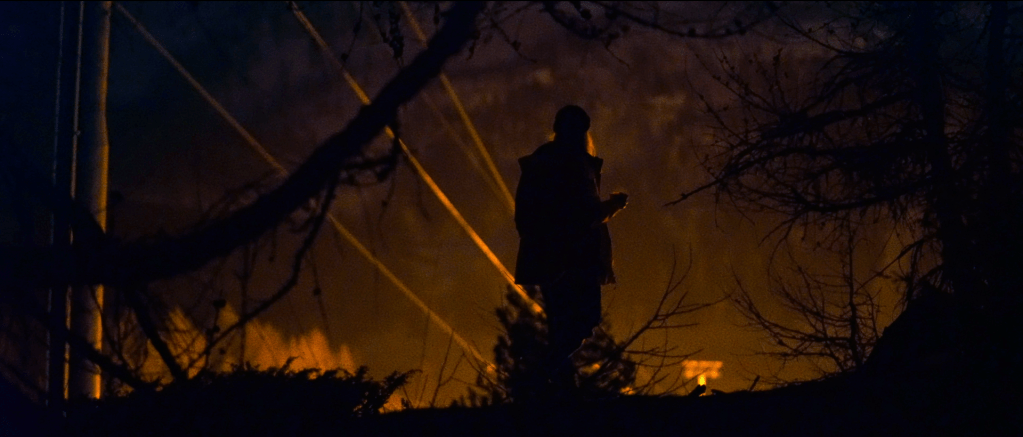
The snowpack scatters moonlight, so we are rarely plunged into total darkness. To meet the challenges of filming in very low light, we used a Sony Alpha7 camera, chosen for its highly sensitive sensor and its discreet body. High in the mountains, we sometimes found ourselves in pitch darkness; the graininess of the footage shot in these urgent moments captures the precariousness of the situation and the resulting anxiety.
During the patrols, the safety of the migrants was always the priority. Our filming setup had to avoid any risk of scaring them or attracting police attention. We had to keep our field crew to an absolute minimum. To remain agile and stay true to the perspective of those conducting the patrols, we used a handheld camera. Encounters with the migrants were delicate moments to film. In the forest, we kept our distance until we could alert them to the camera’s presence. Throughout the shoot, the migrants welcomed our presence—either because they were convinced of the need to expose the violence involved in crossing borders, or because they saw the camera as something that enhanced their safety in that hostile environment.
Making the mountain a character
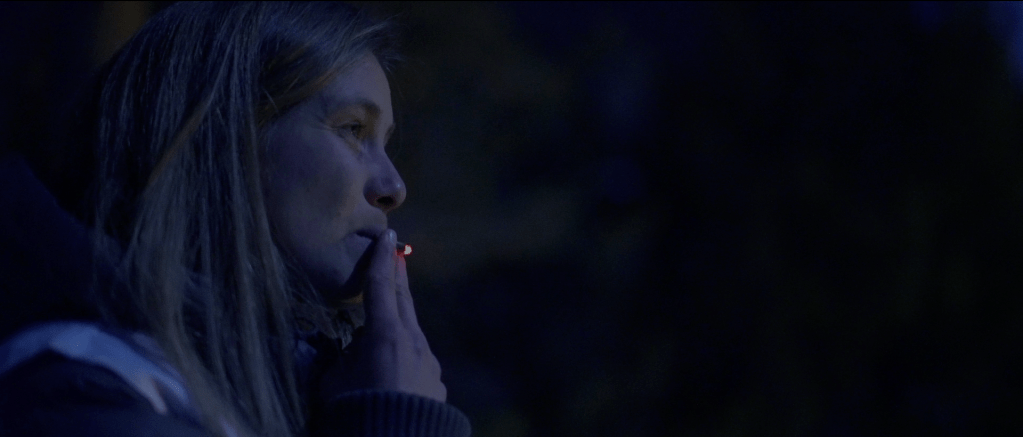
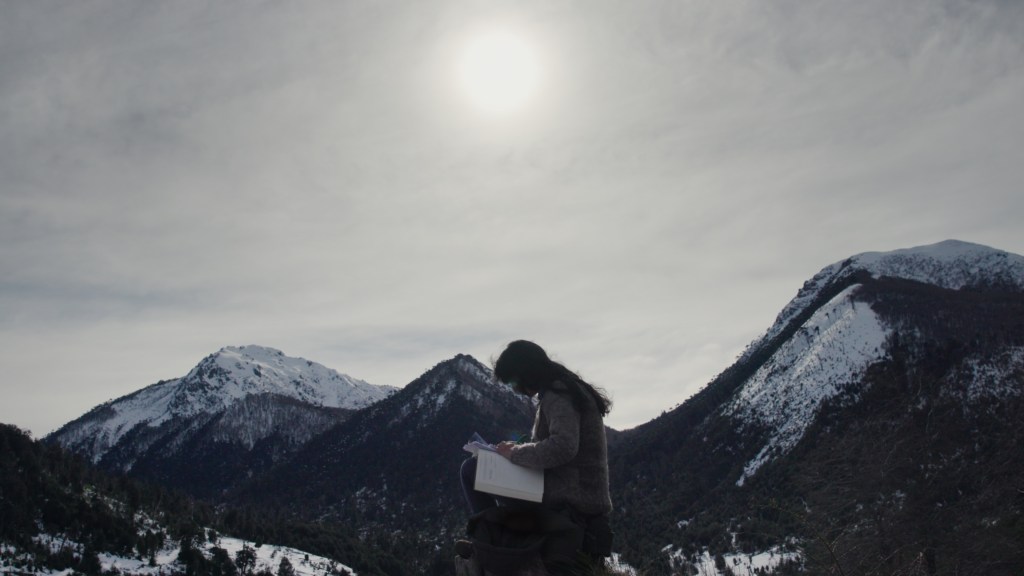
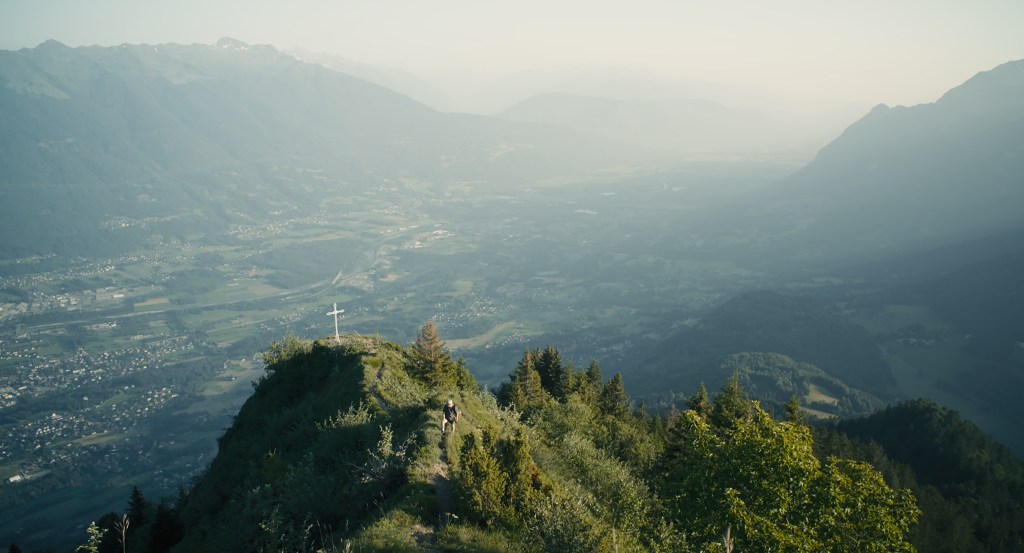
I place the viewer in the position of a lookout—listening and observing like someone on patrol. With Nightwatchers, I wanted to convey the ambivalent feelings evoked by the experience of this kind of patrol: the violence of the border crossing is all the more striking because it unfolds against a magnificent landscape, one you have time to observe while stationed motionless in the dark, waiting hours in the forest for the exiles to pass, facing the imposing silhouettes of the peaks. Static shots of the landscape and the resort, filmed outside of patrol hours, restore the mountain to the central role it plays at the border: it is precisely because the mountain can turn hostile and dangerous at any moment, through cold and snow, that the exiles’ crossing is so perilous.
The Unsettling Strangeness of the Place
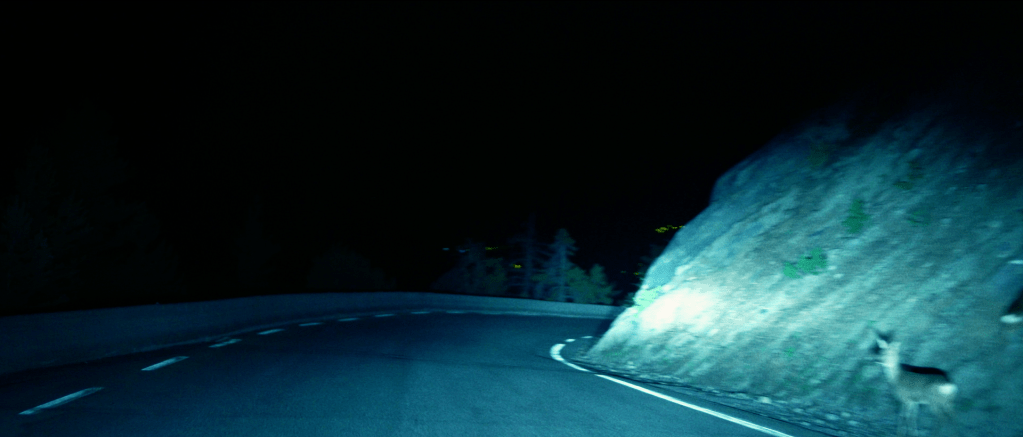
Montgenèvre is dominated by the Janus, a mountain named after the god of passages and doorways, a two-faced deity. The village, too, has two faces that remain oblivious to one another: by day, an international ski resort teeming with tourists in colourful gear; by night, a border village traversed by exiles. I was particularly keen to capture the unsettling strangeness that grips this tiny territory after dark, a landscape roamed by smugglers, exiles, and law enforcement officers. As night falls, the terrain transforms, and the peaks vanish into the mist. The darkness, the cold, and the mountain’s silence create a tense atmosphere. I place special emphasis on sound and off-screen elements to restore the landscape’s unsettling depth and convey the tension that defines these nights at the border.
References drawn from fiction
In my attempt to recreate a night patrol, I draw inspiration from fictional films featuring the night that have shaped my love of cinema—ranging from Charles Laughton’s The Night of the Hunter to David Lynch’s Lost Highway. The film’s score, composed entirely by the band Oiseaux-Tempête, also steers the documentary toward the realm of fiction at specific moments during the patrol—whether accompanying the volunteers as they walk to their lookout point or providing a sense of closure upon their arrival at the shelter through the reprise of the main theme. I hope these directorial choices lend the film a universal quality, allowing it to evoke—beyond the specific context of the Franco-Italian border—a human drama found at borders everywhere today.
Lyrics
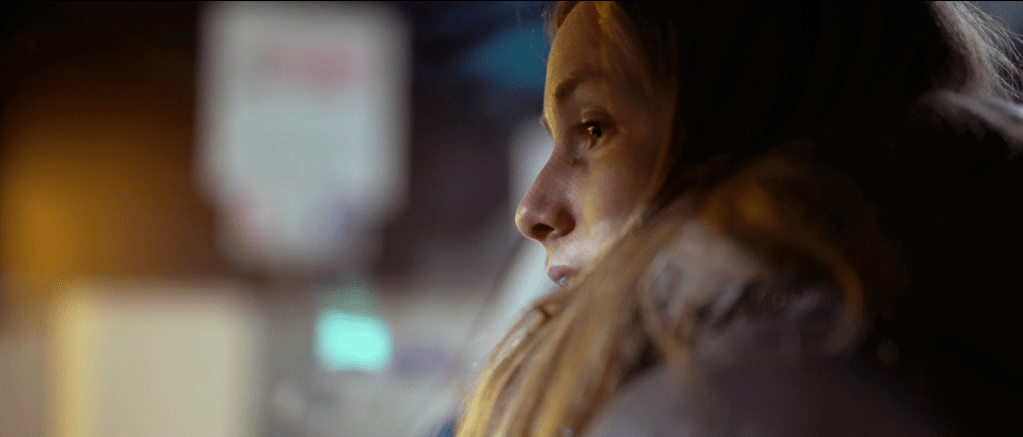
I only collected the words of my main characters in immersion. While remaining on alert, tense, the volunteers confide in me their rage and their revolt. Their words are all the more striking because they can only be whispered in the silence and darkness. I filmed the spontaneous, whispered exchanges between marauders and exiles during their journey to the refuge. This meeting between marauders and exiles, although tense, is a moment of hope for the exiles because they have just successfully crossed a border. Thus, their words bear witness to tragic situations but are never pathetic. I also collected more in-depth testimonies by interviewing exiles with whom I was able to establish a bond during my volunteer activities there in the safety of the shelter. We hear snippets of these interviews, off-screen, at the end of the film, a time the Médecins du Monde car goes back down with the exiles towards Briançon. In the passenger compartment, the tension relaxes and we can then listen to fragments of the terrible journey of these people who have often been on the road for many months or even years.
I would like the long duration of the documentary to allow spectators to adjust their vision in order to accurately understand the too often invisible and invisible drama that is playing out in this border territory. By trying to transcribe through the means of cinema the intensity of the emotions that unfold there, I wish to bear witness to the violence of crossing the border and to question ourselves about the way in which we welcome our neighbors.
Juliette de cillac







 True Story Blog
Leave a comment