
A Conversation With Director Maksym Melnyk, by Film Critic and Curator Sevara Pan
SP: You hail from Zakarpattia. What prompted you to pick up the camera and make this film?
MM: I worked as a journalist in this part of western Ukraine, and I was making a series of short documentaries for TV about the region. One of the reports was on bats, so I decided to go to a village in the National Park, which was in the vicinity of my hometown, as there was a biologist who worked on this issue. And that’s how I met one of the protagonists, Nelya, the biologist.
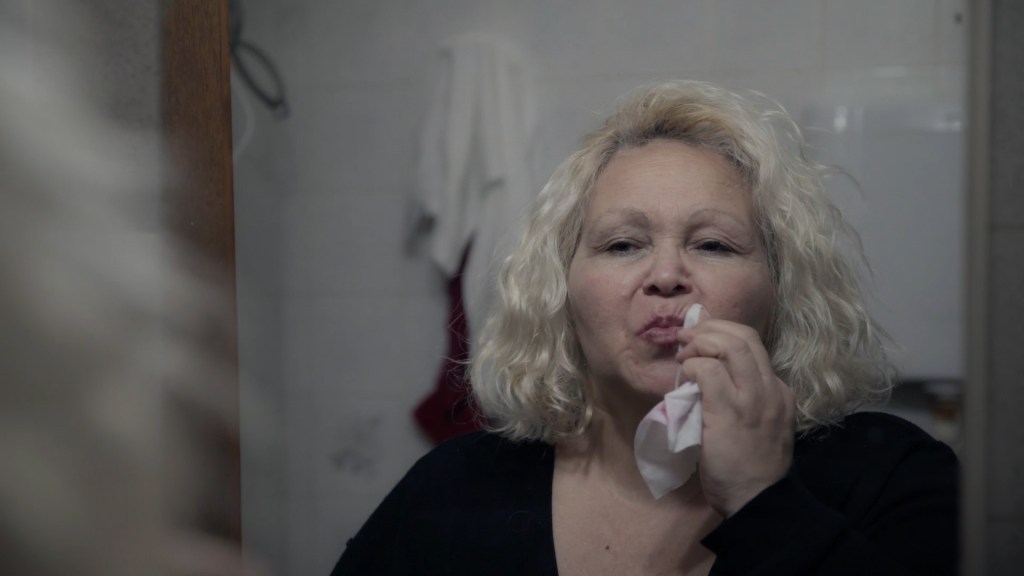
Nelya told me she was looking for the bear scat, and that it was such a precious thing because it helped identify the bears’ diets and territories that they inhabited. That’s especially important because the National Park is situated at the border with Poland and Slovakia, and bears move across borders. Then I met the postwoman, Maria. I was lucky because she was delivering pensions that day, and I saw that the postwoman had a very important social function in the village. She knows the people, she talks to them, and she has this ironic sense of humour. Later on, I met the third woman, who became the main protagonist, Hanna, the farmer.
The three women really impressed me. A journalist and friend from Berlin who accompanied me on this trip, Christiane Seiler, said, “You come from this place, you talk to these people, why don’t you make a portrait of the three women? It’s something special.” So that’s how the idea was born.
SP: Why did you choose this village in particular?
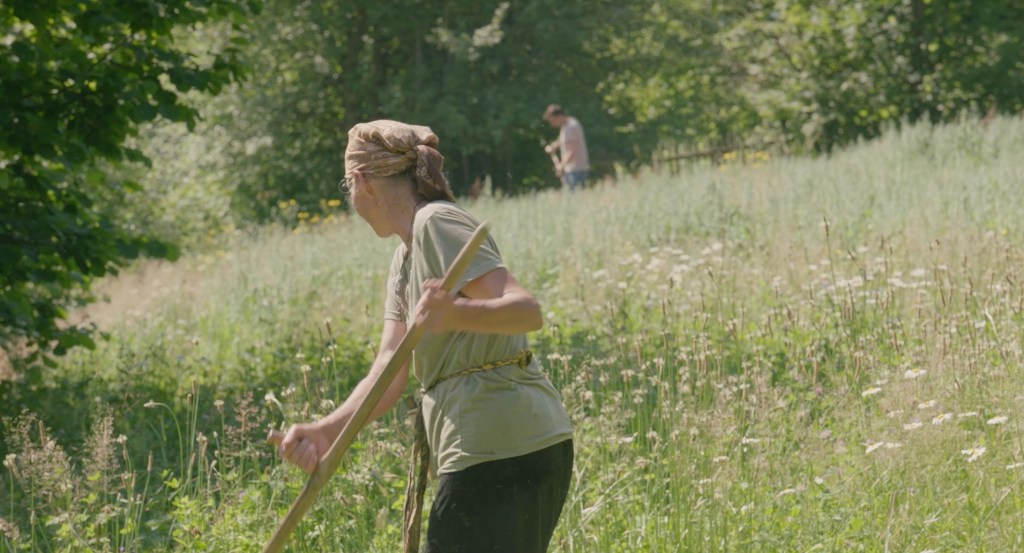
MM: This village is interesting. It’s located in the Uzhanskyi National Park, where nature and the natural environment are protected and preserved. The people living there, on the other hand, are not really protected. They are at a disadvantage. And there is also another reason why I chose this village intuitively. At the beginning of the film, I say in voice-over that ‘Stuzhytsya’ means “something cold” or “a cold place” from the Ukrainian dialect. I wanted to find out why it is called that and who lives there. As we were making this film, we learned how welcoming and warm its residents are and their relationships with one another. And that’s also the message of the film—finding human warmth in a seemingly cold place.
SP: We observe seasons change in the film. Over what period did you film?
MM: After meeting Nelya and Maria, I was looking for a third protagonist. If we only had two characters in the film, there would be an inevitable comparison between them. Three protagonists would form a triad, which would be interesting for the film’s narrative. So I was thinking about all that as I was standing on the road, and all of a sudden I saw a group of women coming down from the hills, herding the cows. And then I saw Hanna, and I was completely captivated by her personality. I asked her if she could sell us some milk. And she said, “No, my dear.” I responded, “Maybe for the German because he needs milk for his coffee?” And she said, “Okay, come in the morning.”
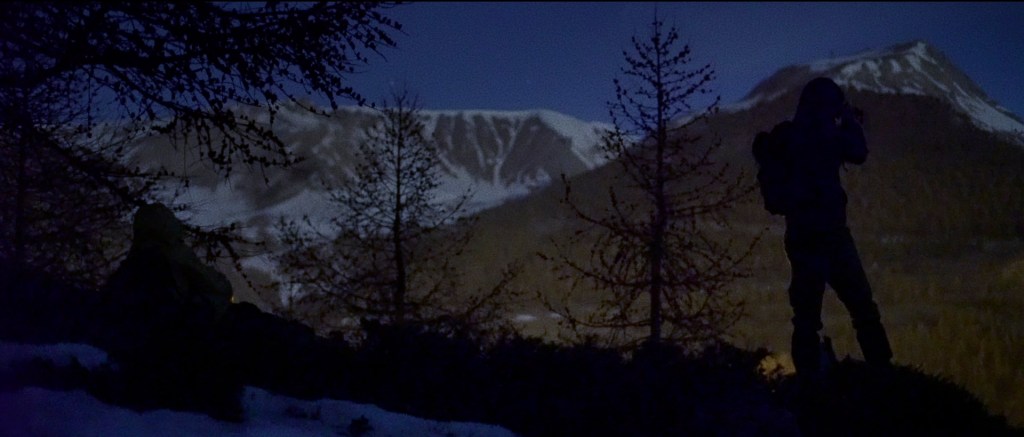
The film starts with a morning scene when we come to get some milk from Hanna and she says she doesn’t want to be filmed, and ends two years later with another milk scene when Hanna says that she likes us like a mother loves her sons even though we are not her children and she “didn’t breastfeed [us]”, and it was time for us to go home. And then we went up the hill to take the last shot of her from the hill and there came the fog, which resembled milk to me, inundating the meadow. The film follows a clear chronology. We started filming in 2019, which also marked a historic presidential election when Zelenskyy scored a landslide victory. And we finished filming in 2021, when the country was almost on the brink of the full-scale invasion and war. In a way, the meadow steeped in the fog in the last sequence also represents the future, the unknown future which lay ahead of us and which we didn’t know what to expect from.
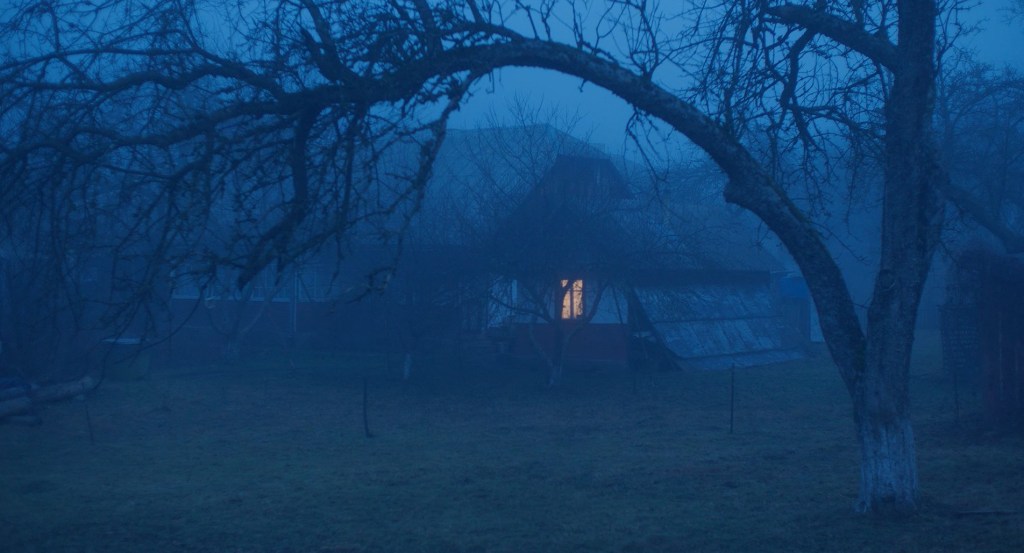
SP: In this scene, you are calling out to Hanna, but your calls echo, with no response.
MM: I was talking on the phone with Hanna, and the network connection was lost. It was lost on the phone, but thankfully not in real life because we are still in contact with Hanna. Of course, that was also a symbolic moment. The story lives on beyond the bounds of the film, and you somehow need to build up a new reality and talk to your protagonists without the camera. The moment on the hill was actually the very last picture we made for this film.
SP: Hanna’s story and the development of your rapport is quite compelling. Why was it important for you to incorporate the stories of the other two women?
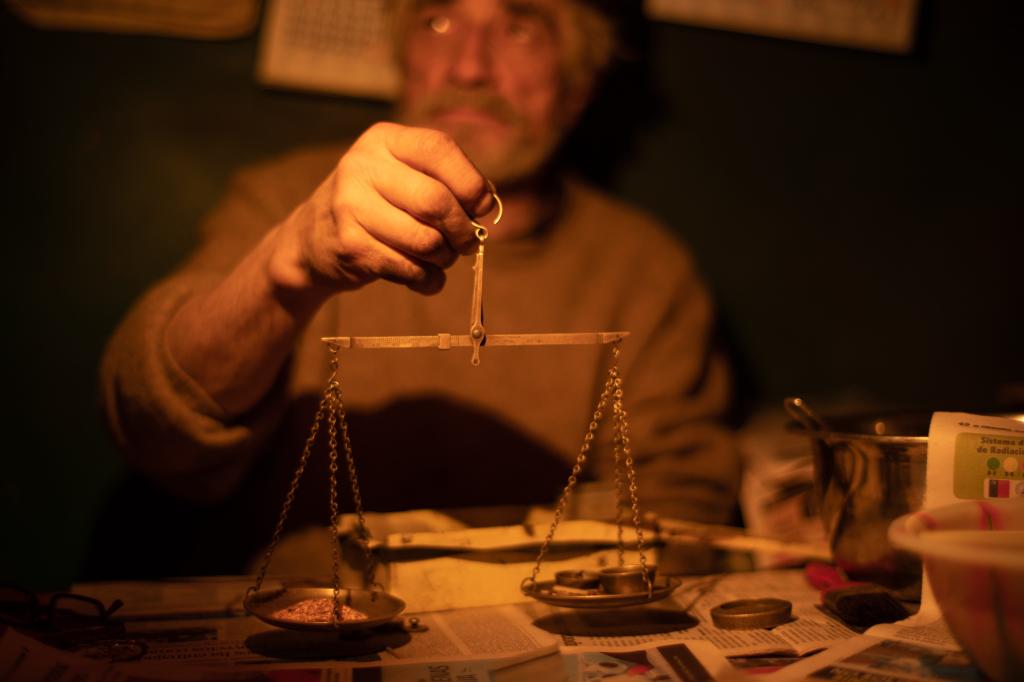
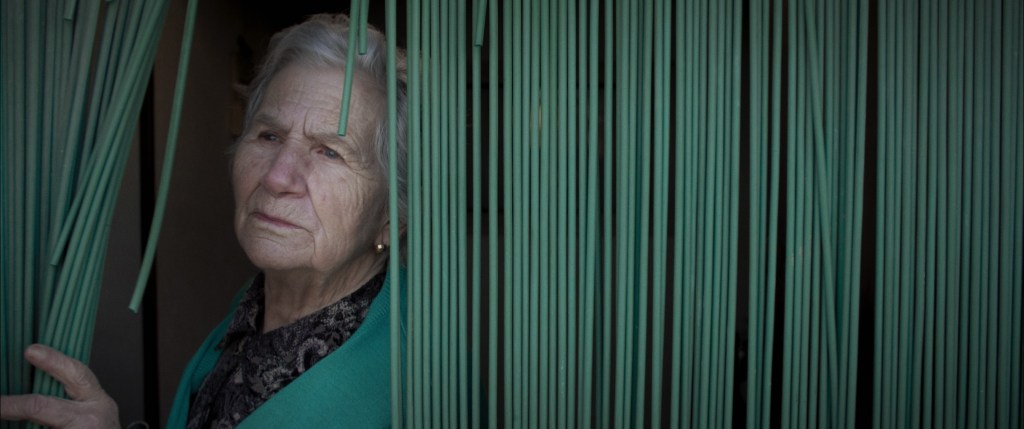
MM: In a way, the three of them form a unified image of a Ukrainian woman in the Zakarpattia region: the dialect they speak, the sense of humour, the irony—it tells me a lot about my own identity too. And at the same time, they tell three dramatically different stories. Hanna is the mother who grieves her lost children. And now many women in Ukraine tragically share this destiny because there are many mothers who lost their sons and daughters in war. The story of Hanna is important because it evidences how a Ukrainian woman never gave up despite all of this loss. Maria, the biologist, represents something entirely different. She is educated, she is on a mission, and she is doing it in the name of science. Through the animals’ scat, she tries to tell stories of nature and species that cohabit the environment with humans. And Maria, the postwoman, represents the village itself, owing to her important social function and her personality. She is also representative of many Ukrainians, who are compelled to leave their country and go abroad to make a living elsewhere. And this is what happens at the end of the film. She goes away, first to Poland, and then to Czechia.
The lives of Hanna, Maria, and Nelya are very different, yet they intersect, presenting interesting portraits of a Ukrainian woman. I was also inspired by Kelly Reichardt’s fiction film, titled Certain Women, that tells the story of three women in Montana, which is also situated in a mountainous region.
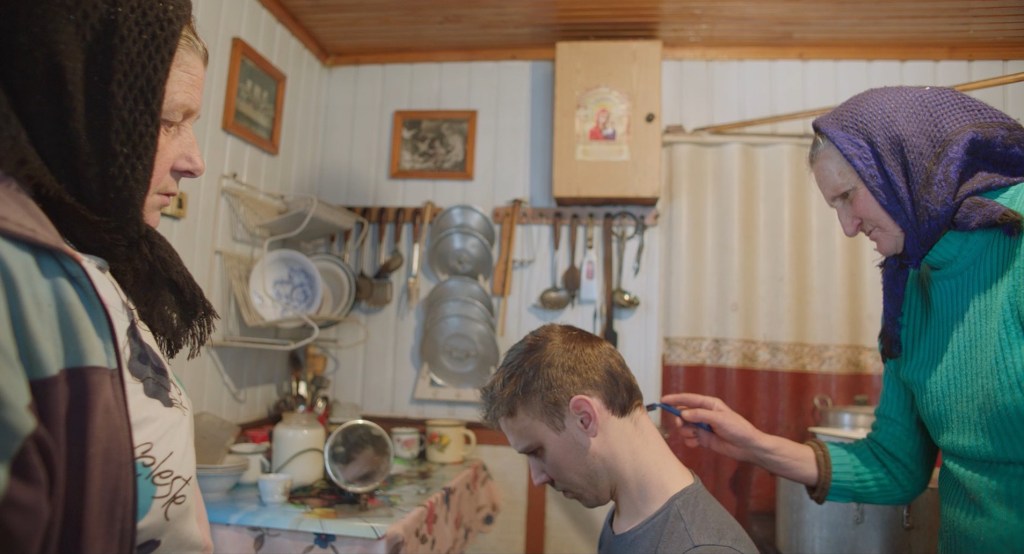
SP: The postwoman Maria says, “Someone should make a film about the dying village,” and you did just that.
MM: Now, it’s even more critical. The war has had its toll on the village because many people have left. Some of the men were enlisted in the army. Some of them perished in war. Others, who were working in Czechia or Poland when the war began, didn’t come back. Prior to the war, the biologist Nelya had always been accompanied by her colleagues and the National park rangers. But since the war started, many of them were enlisted in the army and went away. It’s a tragedy for the village.
Stuzhytsya is one of the westernmost villages in Ukraine, which is probably the safest place in the country at the moment. But still, in a way, Stuzhytsya represents many other villages in Ukraine where there are virtually no men anymore. When we started filming a few years ago, the rural community was already facing the issue of youths and men leaving, but the problem has been aggravated by the war.
SP: The film’s story is very contained to the village. You stay inside the community even during the presidential elections, which were ongoing at the time. What was your rationale for that?
MM: The three women are extremely rooted in this place, its nature and soil. And we tell the story of this “cold place” through the portraits of these women and their life lines. The film is about them, it’s about the place, and there was nowhere else to go. It was wonderful to be there.
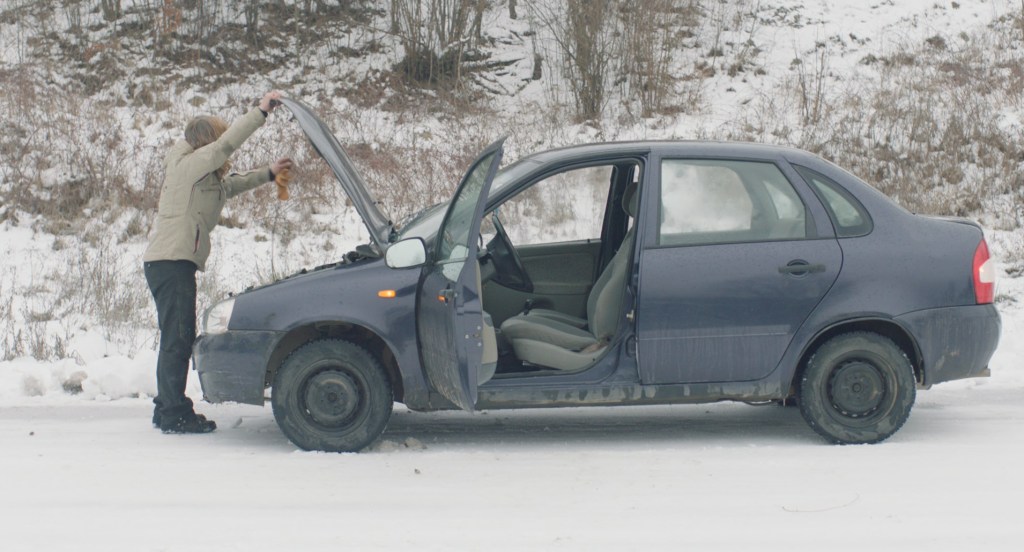
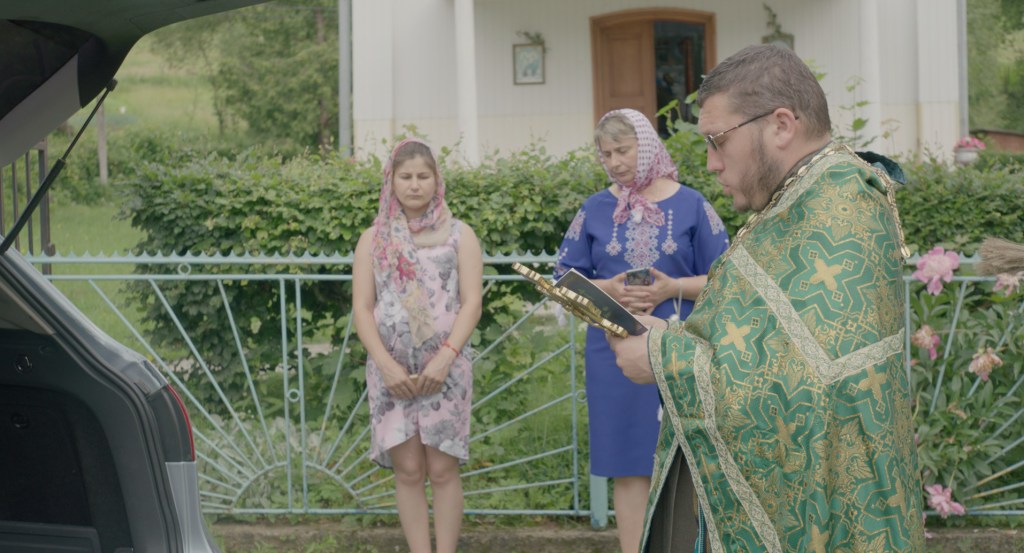
Three Women is quite a green film, as DoP Florian Baumgarten and I had no car when we were filming. We got around on foot, and it helped forming a bond with the protagonists because we would accompany people who were not getting to places by car. The village is quite elongated, stretching around 10 kilometres. Hanna lives on the one end of the village, and Maria on the other end of it, so at times it would take us a few hours to get from one point to another, and there was no car. Well, there was a car of the biologist Nelya, but more often than not it was out of order. When I met Nelya, the first thing that happened was her car broke down. And that car was not only her means of commuting but also her home in a way. Later in the film, we see Nelya, perhaps fatigued by her car constantly breaking down, bringing her car for a priest’s blessing.
SP: You enter and exit the frame throughout the film. Why was it important for the film to keep your presence in the frame?
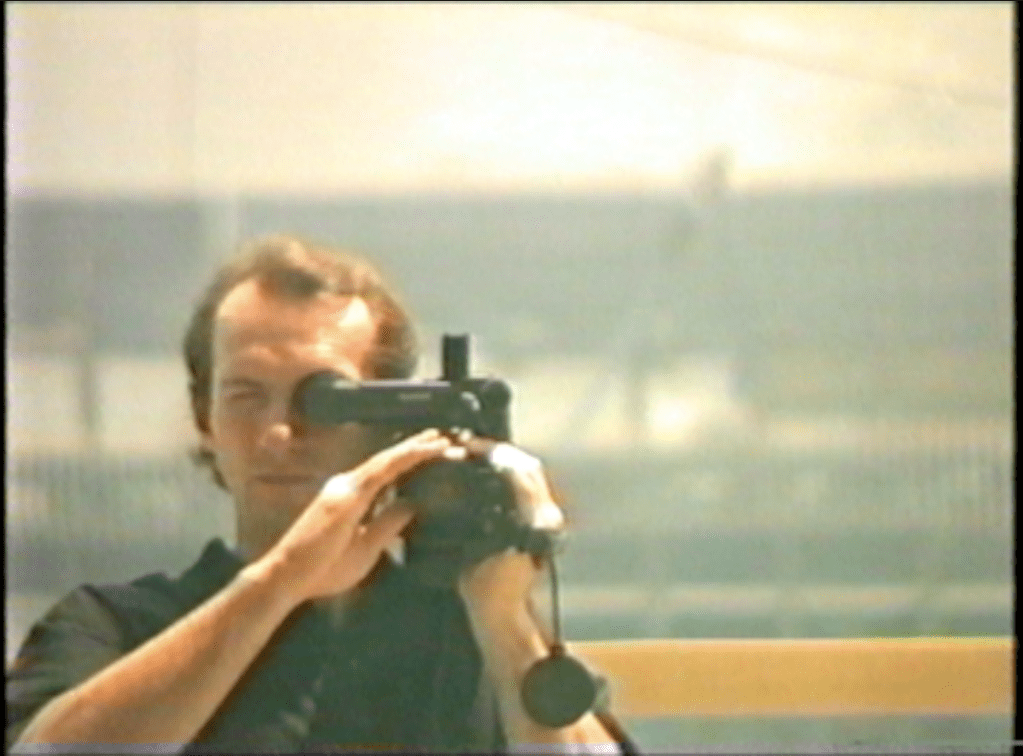
MM: At first I wanted to make a film without my presence in the frame. I think it’s a subconscious desire of a documentary filmmaker to become invisible, so to speak. There are films when there are no directors in the frame, but their presence is very much felt. I think the director can be in the frame, when their presence is legitimate. As we were making this film, at some point we realised that we cannot tell the story genuinely without showing our connection with the protagonists. Who is Hanna talking to all the time? She wants to talk to us. She wants to share her emotions, her thoughts, and her feelings with us. The biologist Nelya needed some support because nobody in the village really understood what she was occupied with and the significance of it. The postwoman Maria also appreciated some company while delivering pensions and carrying a bag of money. She once said, “Oh, I am not afraid of the bears; I am more afraid of the drunken men.”
As for the directing style, I wasn’t a fly on the wall in this film, but it was also important for me not to be an elephant in a porcelain shop, not to destroy the vitality of the women’s stories with my presence. That’s why it was a complicated question and a decision that we made together with the editor, Jannik Eckenstaler. How much of me and of us can be there? The guiding principle was that the stories of the women must be in the foreground, and we were just connecting elements in the narrative.
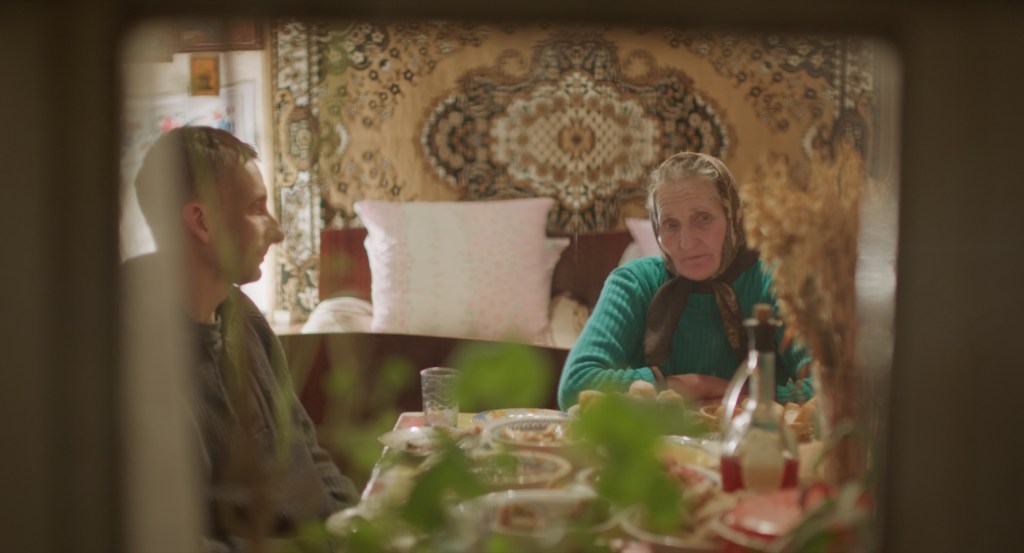
SP: I think it also shows that you are not just parachuting in and out of the community, you two become endeared members of that community.
MM: We were there with those people, and we thought: “Why do we need to hide our presence and pretend that we weren’t there?” When I studied film direction at the Bratislava film academy in Slovakia, the wonderful film director Peter Kerekes told us about this theory that thick directors are always present in their film because the body somehow influences the directing style, and thin directors tend to be flies on the wall. Well, I think I am pretty slim, so the theory doesn’t really pan out for me. But perhaps the exception proves the rule.
SP: Music is largely absent from the film. Could you talk about this decision?
MM: I am not a fan of the poorly chosen music in a film, especially when it comes to a documentary. I think they can disturb the narrative flow and the emotive core of the film. That said, I am not a purist. For example, last year I worked on another film, there was a co-editor, and it’s full of music. Nevertheless, I do prefer the first option—which is as little music as possible—because, as in the case of this film, the sounds of nature and uttered words are all music to me. In the final scene, we hear all these beautiful sounds of nature and animals. That is the real music to me, and you need to have an ear for the acoustics, especially if you work with this medium. Hence, the music in this film—or the little presence of it—is my conscious choice.
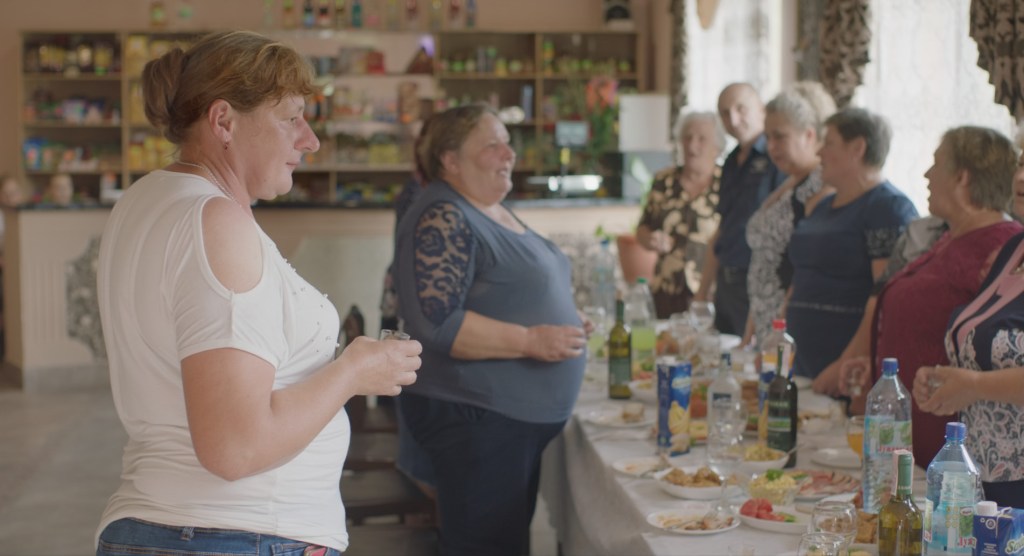
Aside from that, there are three pieces of music in the film: The first one is the church and the church choir, which is an important part of the community. Then there is this disco music, which shows an absolutely different world, where the women are having fun. This music is so crazy, it just barges in and destroys all other acoustics. And finally and strangely enough, there is a piece of Bach’s music in the film, which Hanna unknowingly had as a ringtone on her phone.
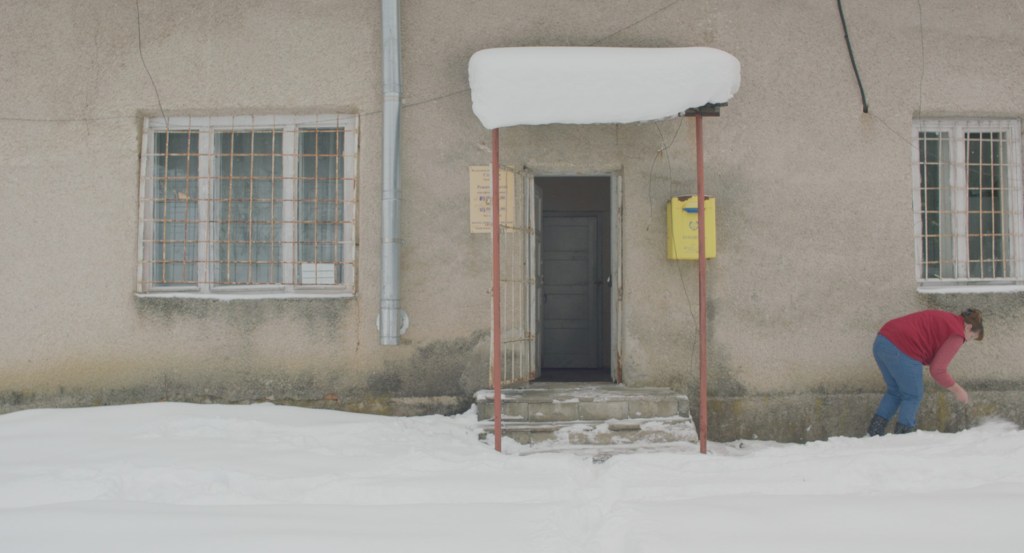
SP: The post office seems to be a place where many residents often gather. This is also where you read out horoscopes to the visitors.
MM: I love the post office in the film. I think that we could have made a film just about the post office, and we would call that ‘89010’, after the postal code of Stuzhytsya. I was absolutely mesmerised by this place, the crazy post office that worked only two or three days a week and had no heating. It was like a social hub, where people would talk about the cows, the money, the electricity, and whatnot. They would even sing songs there, as you see in the film. Unbelievable. I also noticed that people would often come and get a newspaper, which, of course, had a horoscope, so I decided to do a public horoscope reading.
The post office was this warm place to be, and I enjoyed it very much. Unfortunately, it was shut down. It’s become a problem because when I write a letter to Hanna now, it simply doesn’t arrive. There is a postal vehicle, which sometimes comes, sometimes doesn’t, and when it does, the letters are handed to someone and they often get lost. Residents have problems getting their pensions because of that too. So it’s a shame that the post office was closed. It was more than a post office. It brought people together. It was a great thing, really.
Last year, I was in Missouri, in the US, with the film, and after the screening a woman approached me and said, “Oh, I understand Maria, I work at the post office too, and it’s the same here.” I couldn’t believe her. So when I got a chance later on, I headed to the post office because I was intrigued by what the American postwoman had said to me. It was so interesting, and I sent a postcard from Missouri to Hanna. Sadly, it never arrived at the destination because the post office in Stuzhytsya was closed. But it was great to see how universal some things are, the stories of people, and the post office that connects us all.
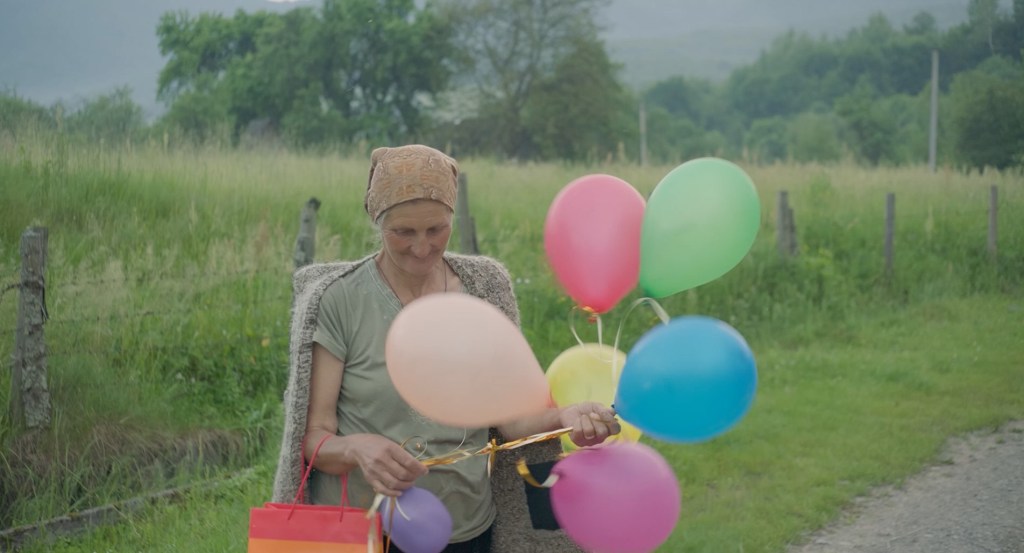
SP: The village is nestled in the Carpathian Mountains near the EU border, and there is quite a bit of conversation about the borders in the film. There are migrating bears who cross the border and consume apples; and there are balloons who fly across the border to Slovakia. Could you talk about the significance of the topic at that time and place?
MM: The talk about the EU is very present because it’s within reach geographically, yet it also feels far away from it in terms of the development. In the opening scene, Hanna points over to Poland, then to Slovakia, and when I ask her where Ukraine is, she responds, “I don’t know where Ukraine is. I lack orientation for Ukraine.” Which, of course, is a wild answer. But where is Ukraine actually when you live in a village that’s located in a dead end? For many, the border question is also important because it concerns their livelihood, as some have to cross the border to make a living.
Before World War II, there was a cultural territory in the region that was shared with parts of Slovakia and Poland, and that area was inhabited by Ruthenians. This cultural territory was split by the borders during the Soviet Union period, and some ended up having relatives on the other side of the border in Slovakia or in Poland. The Carpathian region is also part of the Ancient and Primeval Beech Forests UNESCO natural heritage site. If the border there is gone, this area would no longer be demarcated by the border, and tourists from Poland and Slovakia, for instance, could visit it more easily, which in turn may give some impetus for the development of villages like Stuzhytsya.
So the conversation about the borders is prominent in the film. We actually thought about titling the film On the Border. But in that case, we would have to visualise it more, and it may have shifted the focus away from the women. I think in the end Three Women was a better title for this film.
SP: A lot must have changed in the village since you filmed there.
MM: The situation is even more dire now, and the village is really dying off, with even fewer men there because of the war. As for the protagonists, Hanna has a new pig, which she says is not as good as the one I gifted to her. Maria went away to Czechia for work, and now she is back to the village and really misses the post office, which is closed. And a very positive thing happened to Nelya, who defended her PhD thesis just a few weeks ago. I think I was one of the first people she called to share this great news, this big success.
SP: Have you screened the film to the three women and other residents of the village? If yes, what was their response?
MM: Maria, the biologist, came to the DOK Leipzig premiere in Germany, and she enjoyed it very much. Nelya couldn’t come to the premiere for family reasons. And Hanna didn’t want to come. She is very busy with her new pig, the cows, and everything. So we are waiting for a moment when we can go there to show the film to her. Hanna struggles a bit from all the attention she has received after the film. Some people have come across the trailer on the internet, others have seen the film at a festival in Ukraine, and they really liked her character. But she is a very modest person, and she doesn’t want people to laugh at her. I said to her, “No, they don’t laugh at you. They laugh with you at this situation, at the way life is. You give them hope.” I hope there will be a time, sooner or later, when she will see the film, and perhaps other residents too. It would be nice to organise a screening in the village. However, we have to respect Hanna’s wish if she says she doesn’t want the film to be screened in the village. But I hope we will be able to come and show the film to her.








Leave a comment