
Sofie Benoot – Director Statement
As a child I had a peculiar nightmare on a regular basis. In these disturbing dreams, organic matter was uncannily mushrooming out of my body. Wooden branches, horns and leaves were growing on and out of my arms and legs. The dreams were weird because something that normally belonged to the realm of the “outside”, meaning nature, suddenly revealed itself to be inside of me all along. What message did these dreams signal to me? Perhaps they want to show me a deeply rooted, often ignored connection to the non-human world, worlds we think are closed off from us.

I became fully aware that my body was not closed off to the world. Deep down I think we know that we are not “only” human, that other things co-exist with us, within us, but somehow, I was made to repress these thoughts. And as we all know, repressed thoughts resurface at night.

Becoming ecologically aware is about recognising that seeing the interconnectedness of all things is more often then not uneasy, dark, uncomfortable and confusing. We are not in the world. We are the world. Perhaps we should start singing that corny song non-ironically.

As an adult, I still experience nightmares. Last week I dreamt a heat wave dried everything up, all colours disappeared and my garden was unrecognizably grey, white and yellow. These apocalyptic climate change dreams send me the same message as my childhood ones: that there is no escape, no safe place away from ‘the world’. My dreams, both now and then show me how intertwined things are. How we are both inside and of the world. Distances collapse in dark ecological awareness. Two days ago the sunset in Brussels was beautiful because of the forests burning in Canada.

One day the YouTube algorithm recommended a video of the largest kidney stone in the world. The kidney stone was beautiful, disgusting and surprising. The world of stone and the human world, which seem so far apart come together in the human body. That is a dizzying thought and a slightly nightmarish one, and ecological thought by all means. I reminded me of my dreams back when I was a teenager.

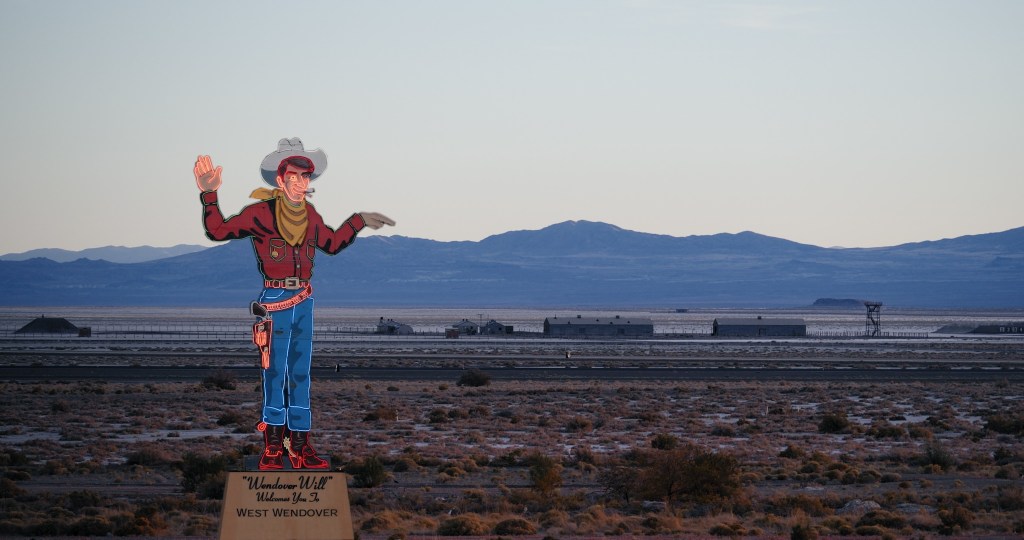
In my previous film Desert Haze (2014) the American desert known in the myth of the Western as an empty place deprived of human presence, is not portrayed as barren background but as vivid foreground. Desert Haze became an associative essay film in which a patchwork of different stories overload the desert with meaning and history. After making this film, I became further captivated by how the human world relates to the non-human world, especially the world of stone. The stone-world is an often overlooked world (especially in the prevailing ecological narratives where only the “green” part of the planet is taken into account). Stone lies at the foundation of our world but finding a narrative in which it figures as something more than a supporting role is difficult.

I thought portraying our relation with stone could be a way to address certain ecological questions. Stone symbolizes a certain tradition of relating to nature that I inherited as well, living in the European West. It offers a metaphor of how we look at nature as something outside of us, far away strange and ‘other’, and as something for us to extract, nature as a resource. But kidney stones tell us that we are composed of the minerals and matters of this planet

We are all part of a gigantic reorientation in these times of ecological crises: How to come to terms with the infinite depths and consequences of our (in)humanity? I am a filmmaker, what can I do to participate in this enormous task of rediscovery?

We need to reconnect differently with the non human world in order to avoid environmental catastrophes. For writer Chia-Ju Chang “the term “ecology” has to be taken more broadly to mean an ensemble of “ways of seeing”, which can serve as the critical, ethical and aesthetic foundation for new relations between Homo sapiens and the natural world”. Finding different ways of seeing will be important in formulating possible new relations.

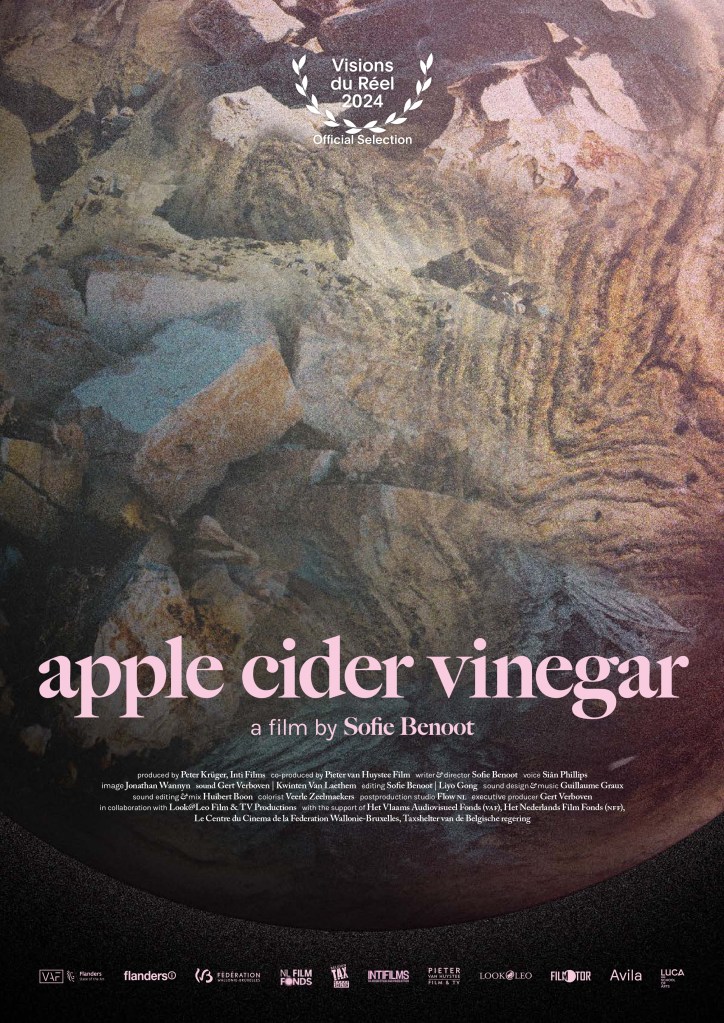
How can we find new ways of seeing? How can I try to formulate possible ways of filmmaking? For my film Apple Cider Vinegar I decided to start with this contradicting figure and haunting image of a human stone, a kidney stone. What places and thoughts can we reach starting from the image of a human made pebble?









 True Story Blog
Leave a comment