
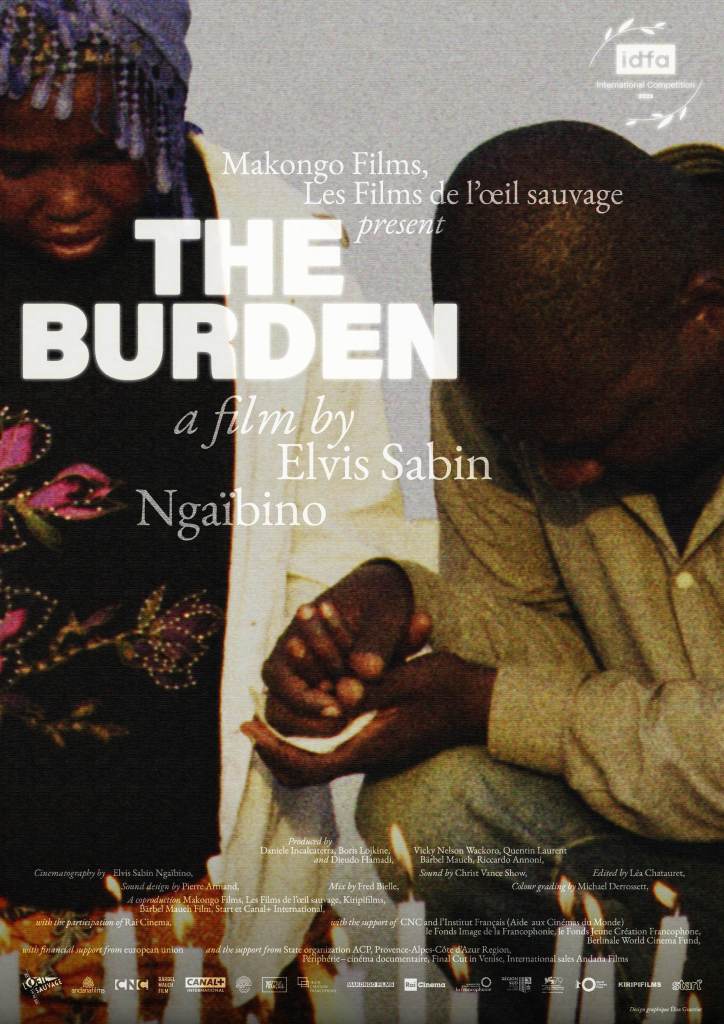
Elvis Sabin Ngaïbino – Director’s Note

Religion in the Central African Republic
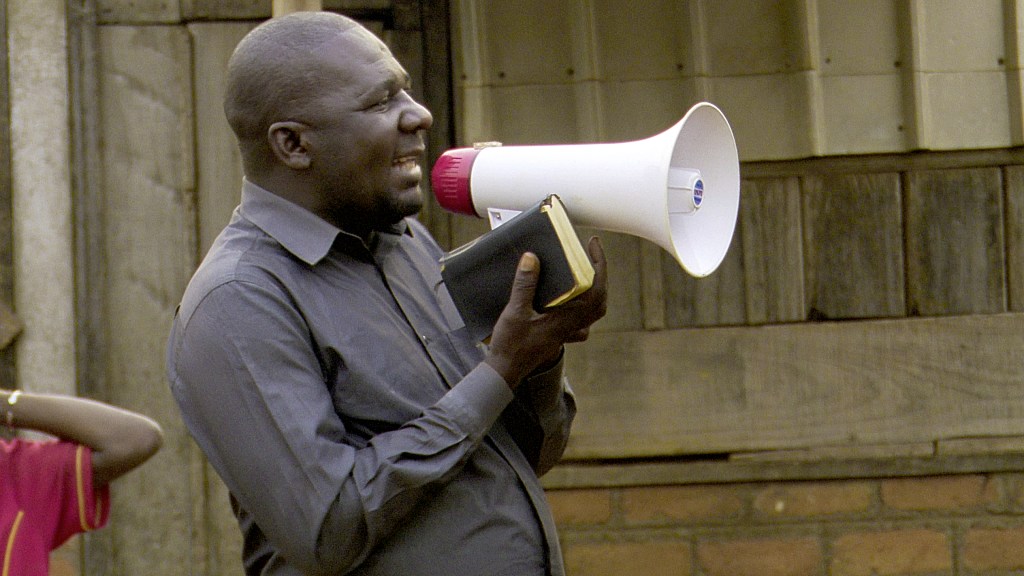
I have wanted to make a film about religion for a long time. Here in the Central African Republic, religion is everywhere. In my street, a young man is shouting into a loudspeaker: “Prepare the way of the Lord, for the hour is at hand …”. He is very young, you don’t feel he is very sure of himself. Passers-by give him a distracted look. A few steps further on, another man is handing out Bible books with a large radio on his shoulder. He is not a big hit. In the market, on the other hand, an old man in a shabby old suit, with a Bible in his hand, is in a state of excitement. The man predicts the word to an enthusiastic audience of mostly neighbouring women traders who have abandoned their stalls to follow him closely. Towards the end, the man addresses the crowd: “You have your miracle, you just have to believe in it. His whole body shakes with passion, his face is covered in sweat. Crumpled notes and coins, fake jewellery and foodstuffs pile up in his pocket. The man grabs it all and hobbles away to try his luck in another market. He has just won his day, a precious booty to provide for his family.
In a country where almost nothing works and unemployment is taking its toll, more and more men and women are involved in this kind of practice. To escape poverty, they are forced, Bible in hand, to try their luck in the streets and markets. They do not always win. They are often insulted copiously, disparaged, minimised, called thieves, beggars, ‘false pastors’. I am even more touched by these than by those who know how to win over the crowds. Among these street and market preachers are students, unemployed graduates, fathers of families overwhelmed by the course of events. They know how to read, write and express themselves in French, they have skills that they would have liked to put at the service of the country, but the country does not know what to do with them and in desperation, they are reduced to using the name of God to get by. Can we blame them?
Film the religious
Many documentaries have been made about religion in Africa. They often show a sharp criticism of evangelical churches and their pastors, who are shown as prophets who think they are demigods and rule as gurus over their followers, taking advantage of their blind faith to impoverish them even more by promising them happiness, abundance, marriage and travel. There is something that bothers me about these films, often made by Europeans. What are they trying to show? That Africans are gullible, easily fooled by swindlers, too stupid to go to a real doctor? As an African filmmaker, my view is different. Of course we have our share of crooks. But people are not stupid. If they go to religion, it’s because they get something out of it. What they experience through religion enriches their lives. It fills them up. In Europe, this is something that has become difficult to understand, but here, it is obvious, everywhere, to everyone. I see the beauty of this search for God in our lives and that is what I want to show.
I want to make a film about religion without judgment, without condescension. By showing the power of the feelings attached to it, especially when it comes to miraculous healing. Because I want to make a film about miracles. It may make you smile, it may seem naive or silly. But that’s what I want to do. Great Christian filmmakers have tackled this before me: Bresson, Dreyer or Rosselini. Each in their own way showed us miracles. To make the invisible felt within the visible is without doubt the most extraordinary power of cinema. This is what I hope to achieve. It was with this in mind that I went to find my cousin Rodrigue and his companion Reine and asked them if they would agree to me making a film with them.
The seropositivity of Reine and Rodrigue
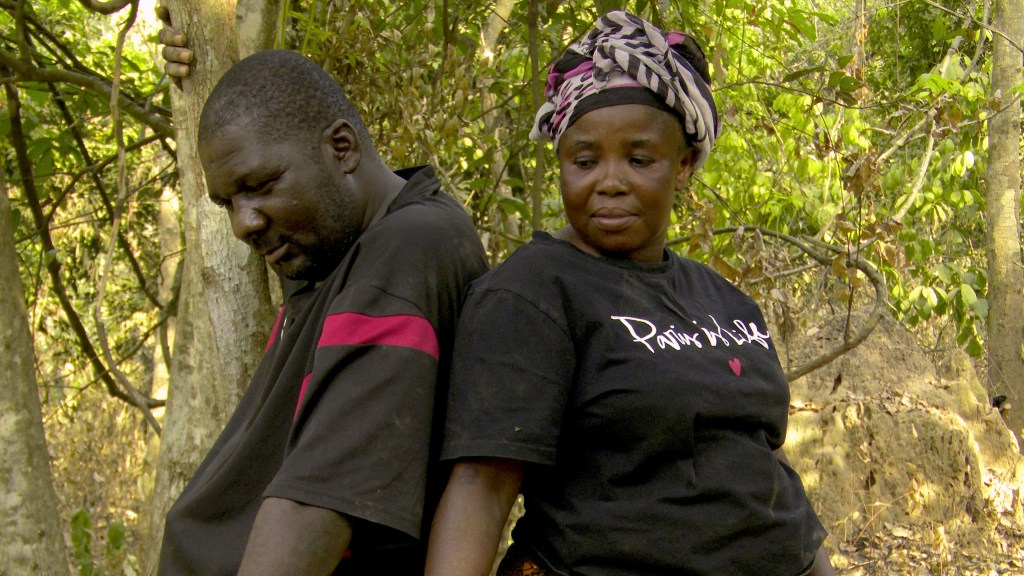
Rodrigue and Reine are both very religious. I have known Rodrigue intimately for many years. We spent our childhood in Bossangoa together. He was already a teenager at the time, he was my elder, and I followed him everywhere. We would play ball, climb trees to eat fruit, swim in the Ouham River a few metres from the konon (hippos), steal maize and groundnuts from fields poisoned against thieves, eat the doughnuts of Grandmother Matanda, suspected of likoundou (witchcraft), steal the priest’s iron gates to make our little toy cars. We shared our secrets, from the most banal to the most intimate…
Later, when Rodrigue learned he was HIV-positive, I was one of the few people he confided in. AIDS had a big impact on my generation. As a child, I remember seeing a poster on the wall of the clinic where our father worked as a nurse. It showed a monstrous creature with wings leaning over the bed of a skeletal patient: the threat of AIDS. Later, in the street, I would walk at a leisurely pace so as not to trample on the virus, I would avoid crossing the path of any skinny person, and I would insist that my older brother carry me. When Rodrigue told me his secret, I was shocked. I kept the secret and he was grateful.
Before proposing to Rodrigue and Reine to film them, I thought a lot about it. Until now, Rodrigue and Reine, like most HIV-positive people in CAR, have chosen to keep their condition a secret. Agreeing to participate in a film that would reveal their HIV status would therefore be a decision with serious consequences. Rodrigue responded to my proposal with enthusiasm. In any case, as he intends to become a pastor, he knows that he will have to present himself to his followers in truth. He is preparing for this. If the film precipitates the movement, so much the better. But it was Queen’s response that touched me the most. “Elvis, as we keep telling you, all things work together for the good of those who love God. If it is God who has sent you to use us to tell others about this cursed disease, why should I refuse? This will be our contribution, a good way for us to break the silence that has been weighing on our relationship for a long time. Marginalisation and stigmatisation must never take over in this fight. Reine and Rodrigue see in the irruption of this film project in their lives the hand of God.
Reveal the secret
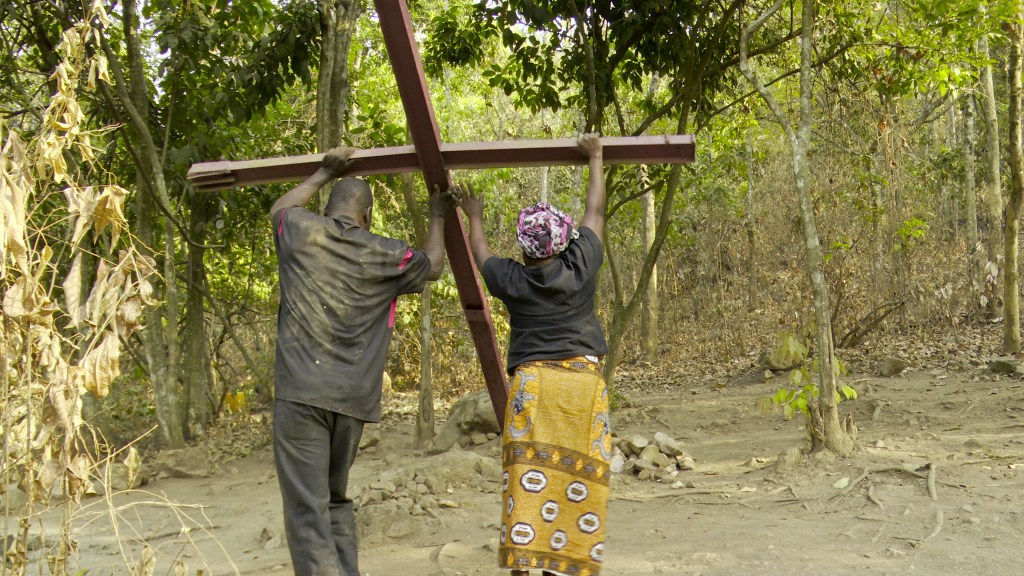
It is not only a threat, but perhaps a blessing. The secret of their HIV-positive status has become a curse for them and they are desperate to get rid of it, but they don’t dare to take the initiative. They think that the film could help them. Obviously, beyond their consent, this is a great responsibility for me that I do not take lightly. It implies a commitment on my part to support them and accompany them to face the difficulties that this revelation could create for them. If I’m going to do this, it’s because I feel that they have a strong desire to change their situation, but also because we can, through this film, change mentalities in CAR. In our country, being HIV-positive is still marked by shame and fear. Most patients keep their illness a secret, so that thousands of men and women die of AIDS, taking their secret with them to their graves, leaving the wildest rumours and the most acerbic assumptions behind them. Thousands more remain silent and choose not to seek care for fear of being stigmatised. If I can change people’s minds with my film, I think it is worth it.
Reine & Rodrigue
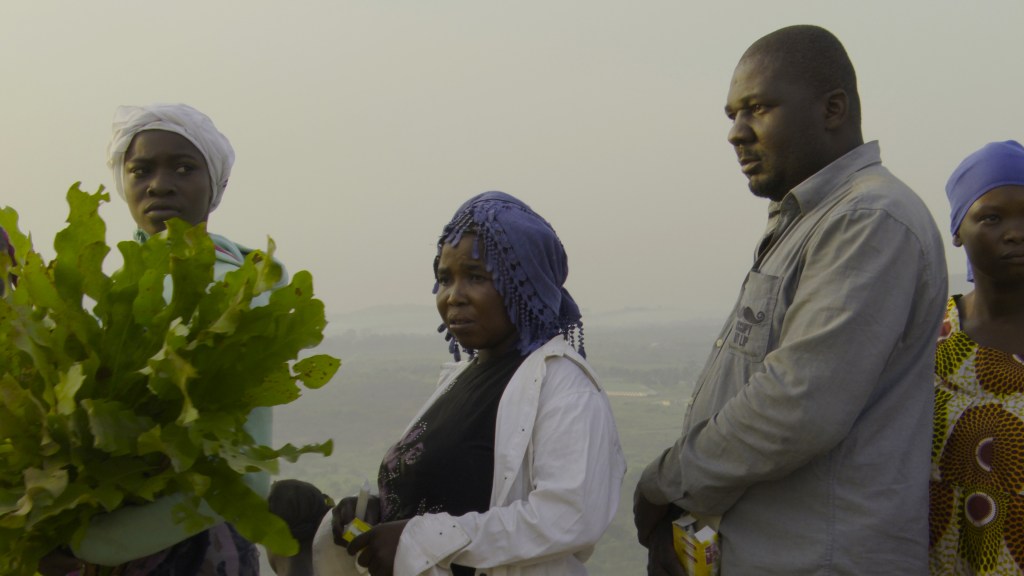
Rodrigue and Reine are the perfect characters to carry this film. Rodrigue and Reine are a very close couple. According to tradition and religious rules, Reine calls Rodrigue “papa”, while Rodrigue calls Reine “mama yingo”, or spiritual mother. They live a deep and mutual love, a cordial understanding as one rarely sees, and share all their secrets. Rodrigue tells Reine everything, and Reine tells Rodrigue everything. I am overwhelmed by this rare form of discipline that exists in this couple. Religion certainly has something to do with it. Illness could have separated them. The opposite happened. When they found out they were HIV-positive, they went through a terrible crisis. Reine was terrified. As for Rodrigue, he acknowledged that he was the cause of the illness and he never stopped blaming himself. He accused himself of all the wrongs, blamed himself for his past dissolute life, his negligence, judging himself unworthy of his wife’s forgiveness. But she forgave him. The relationship between the two is deeply moving and makes me want to tell their story. Rodrigue and Reine have two very different relationships with religion. For Rodrigue, religion is first and foremost a business, a profession and a means of earning a living – which does not mean that he is not sincere. With Reine, the relationship is more interior, more spiritual. I like the fact that through the life of the couple, the two dimensions are intimately mixed, the economic and the spiritual.













 True Story Blog
Leave a comment