
Interview with Directors Stéphanie Barbey and Luc Peter

Young undocumented people are about 2.5 million in the USA. Your choice of following one of them with a strong narrative approach is one of the highlights of your film. How did you choose Carlos and his family as the main protagonist ?
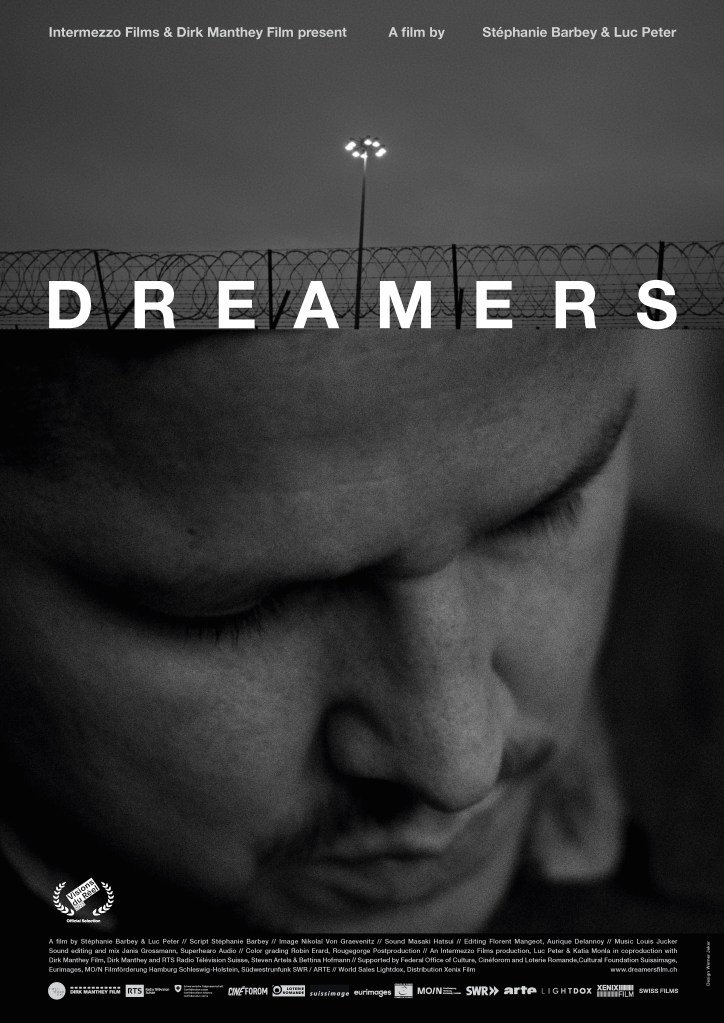
We met Carlos eleven years ago while researching for our second documentary, BROKEN LAND (Locarno 2014, IFFR 2015) which explores the US Mexican border. With DREAMERS we wanted to dig deeper into the questions of US immigration, namely, what does it mean to live as a young undocumented person in the US today. We believe that the power of cinema is not in explanation and numbers, but in feeling and empathy. Through this intimate portrayal of Carlos and his family, this individual story and life, we can feel the extent of the immigration tragedy happening today in the United States.
Carlos has something unique and emblematic at the same time. There is something about him that touches us deeply: a combination of courage and resignation. He is an “ordinary hero” who never gives up despite all his difficulties.
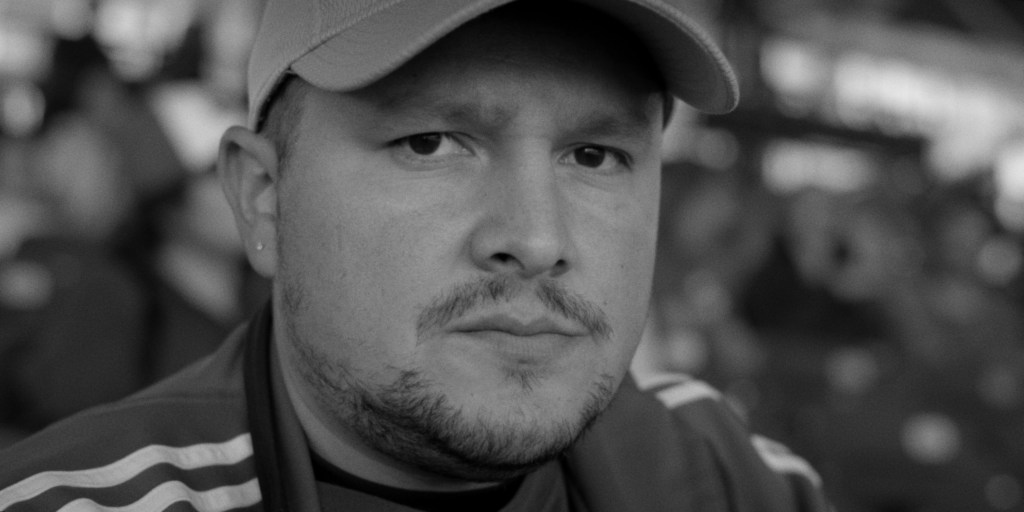
The story of Carlos is told through his voice, a voice over that gives us a rare intimacy into his life. It was entirely written and structured to give the film its unique storyline, taken from his words and from interviews you have conducted with him over the years. Can you tell us more?
Our first meeting with Carlos was a turning point in that choice. We met him in the Chicago suburb of Blue Island. Carlos told us his story for one hour straight. The sound of his voice and the rhythm of his words immediately moved us. Throughout the process of the film, we tried to recapture this moment, which we experienced as a moment of confession. Very quickly the idea of building the film around this «voice-over-confession» felt obvious. This choice is really the framework of the film, its backbone.
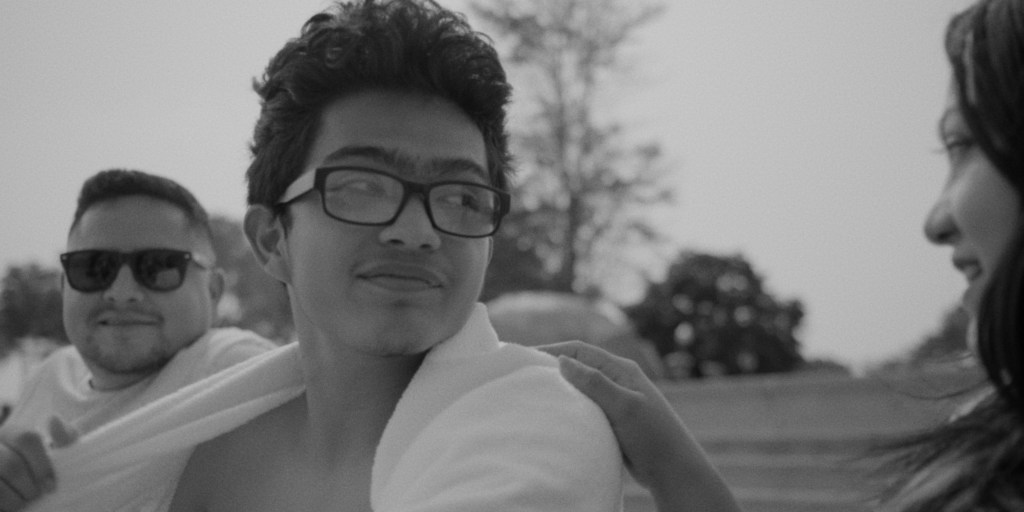
Your film takes place in the city of Chicago. When we think of immigration, it is not the first city that we can think of. Can you explain your choice?
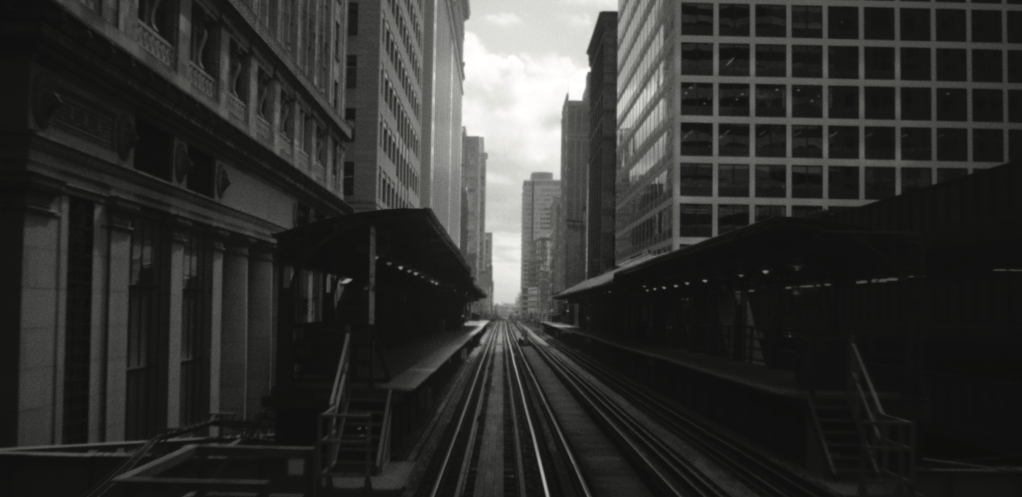
Chicago is a historic city with character, vigorous winters, and spectacular architecture. It is a cinematographic city and home to the third largest Latino community. Chicago is a “sanctuary city” as it tries to apply a tolerant policy towards the undocumented people. Nevertheless, we can see through Carlos and the story of his family, that Chicago remains the ground of violence, racism, and some of the most important inequalities in the nation.
It is a metropolis that is both avant-garde and segregated, with rich and privileged white neighborhoods to the north and poor black and Latino neighborhoods to the south. These contradictions make it a complex yet rich backdrop for our story. Chicago also remains infamous for having one of the highest crime rates in the nation.
Talking about cinematography and artistic choices, you have decided to film in black and white.
Yes ! The black and white camera work of Nikolaï von Graevenitz (German Camera Award 2022) was specifically chosen to highlight these contrasts, contradictions, and to emphasize what it means to live in the shadow of the US legal system. Starting from a very personal story, the film addresses issues on a more universal level.
This narrative is also reinforced by the music of Louis Jucker (Swiss Music Awards 2021). He immerses us in powerful emotions through poetic music to picture compositions.









 True Story Blog
Leave a comment