
Janaína Nagata – Director’s Note
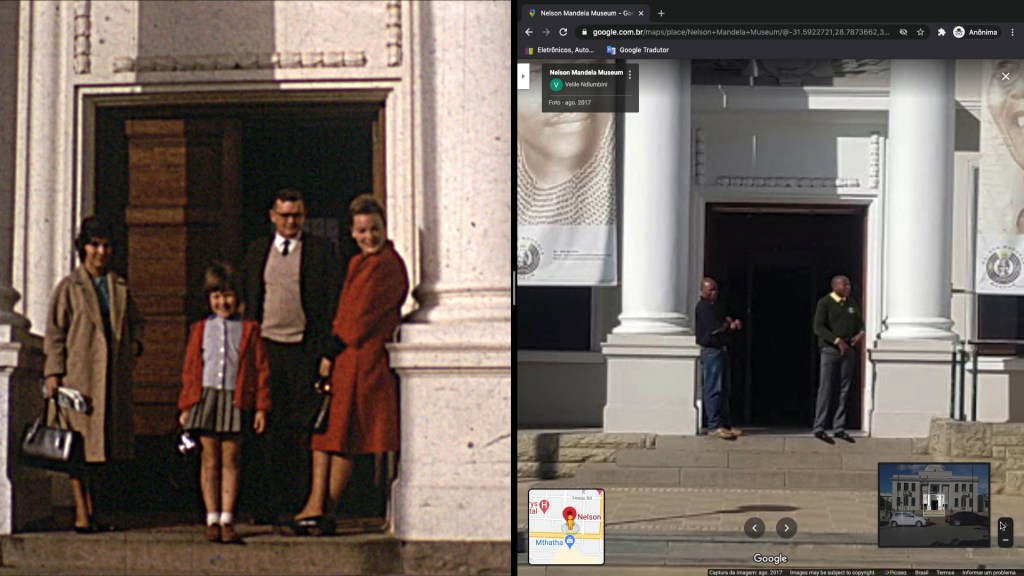
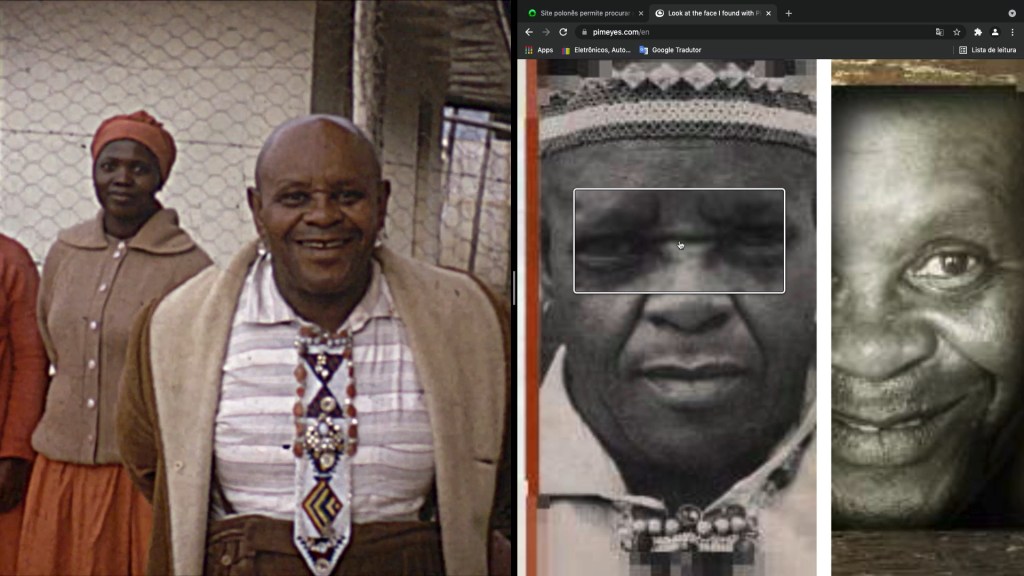
The visual concept of “Private Footage” is based on a desktop’s design, envisioned to explore the differences between a 16mm footage’s material existence and the internet language’s phantasmagorical virtuality. Conceived on a split screen model, this layout shows the 16mm film on one side and a Google Chrome’s window on the other. This arrangement is aimed to provide a visual organization for an investigation on the footage’s origin, using internet widespread search tools such as Google and Youtube, along with more contentious programs including, for example, face recognition apps. It also intends to stress visual relations between what appears in the footage and what is found on the internet’s massive archive. In other words, it attends both to a formal exigence of rigorous composition and to the desire of a conceptual approach, capable of reflecting upon the material and the virtual dimensions of images in contemporary world.
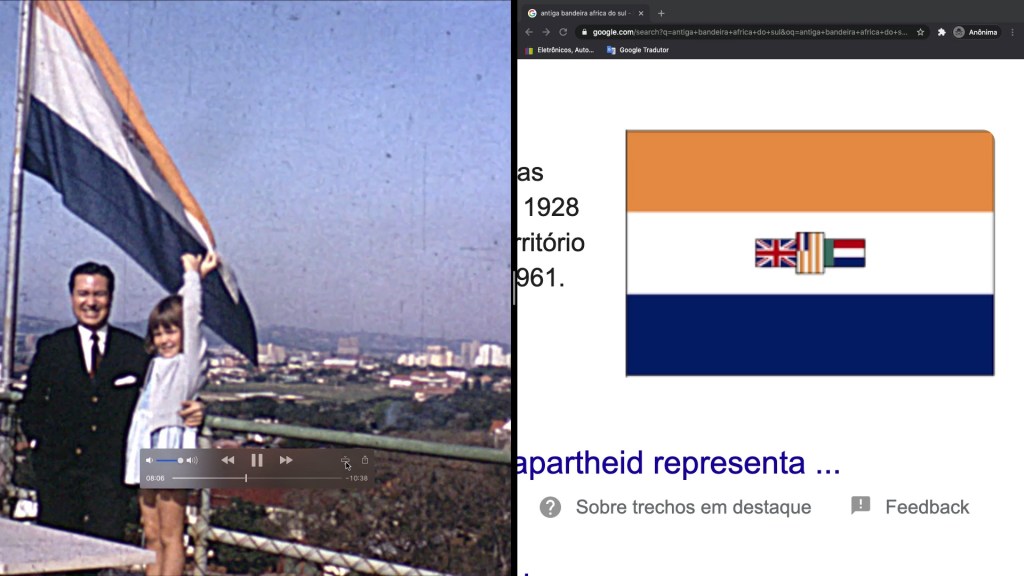
At first, though, the film does not disclose this visual concept in all of its sides. Instead, it starts showing the full size 1960’s anonymous color footage, which came to my hands by accident. In this initial moment, the material should be experienced in all its strangeness, revealed by its uncanny images shot in South Africa in the 1960’s, when the country was haunted by Apartheid’s political system of racial segregation. That is also when the found footage should be experienced in its acute physicality, as an old document which came back to life. At this point, it must be said, the spectator still doesn’t know that he or she is dealing with a desktop movie, and neither the exact conditions under which the footage was made. All he or she has in front of him or her is the apparently innocent images of family registers.
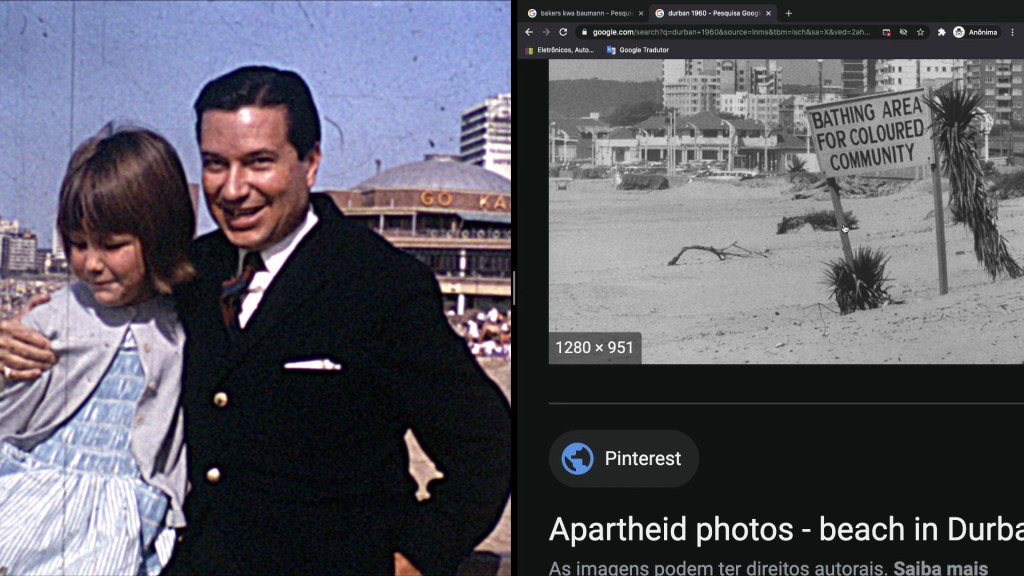
It is only after this first spectatorial experience that the desktop device is exposed. The bipartite structure chosen is quite simple, purposely to take full advantage of the potential gaps and links between the two visual dimensions explored. Besides that, a clear structure allows me to explore most of the elements already there in the found material in terms of setting, framework, gestures, and visual language. This also leads me to question about the extent to which the forms undertaken by the amateur filmmaker are intrinsically political, even when this is not visible at a first sight. This political layer of the material is made clear later on the movie, when the desktop research reveals the involvement of the filmmaker’s family with some of the main political figures of the Apartheid regime.











 True Story Blog
Leave a comment