
Interview With Dieudo Hamadi
What triggered off this film?
I received a call from one of the members of the Association of Victims of the Six- Day War who said to me, “We have just decided to go and try our luck in Kinshasa, because we can’t take it anymore”. During the filming of Maman Colonelle, I saw them pleading their case at the police station, and I was so touched that I decided to make a film with them. We kept in touch, but I didn’t expect things would happen so quickly. I was in Europe for the post-production of Kinhsasa Makambo. I had to be able to catch the same boat as them. I told the co- producers, Quentin Laurent and Fred Féraud, that it was an opportunity not to be missed, that the film would be made during this trip and that I had to get to Kisangani as soon as possible. We set up this project without having written it. 0n June 4, 2018, I found myself in Kisangani, and the next day we started shooting.
In the days leading up to the departure, how did you take part in the preparations?
I came up with the idea of taking the boat with them. I missed the first group I wanted to follow; they had already left. A second group was preparing for the journey. Before embarking, we had to spend approximately three months in Kisangani. They didn’t have enough money. They had booked their passage on a boat, but the captain didn’t think it was worth waiting for them. We had to wait for another boat which didn’t leave until three months later. For me, the film was based on that trip down the river, therefore I had no choice but to wait. I filmed the preparations for the trip, and I tried to understand from the inside how the group worked, but these are things I didn’t keep when editing because they disrupted the balance of the film. The structure of the film is something we worked on during the editing process.
In Kisangani, what is their status, as war casualties and disabled people?
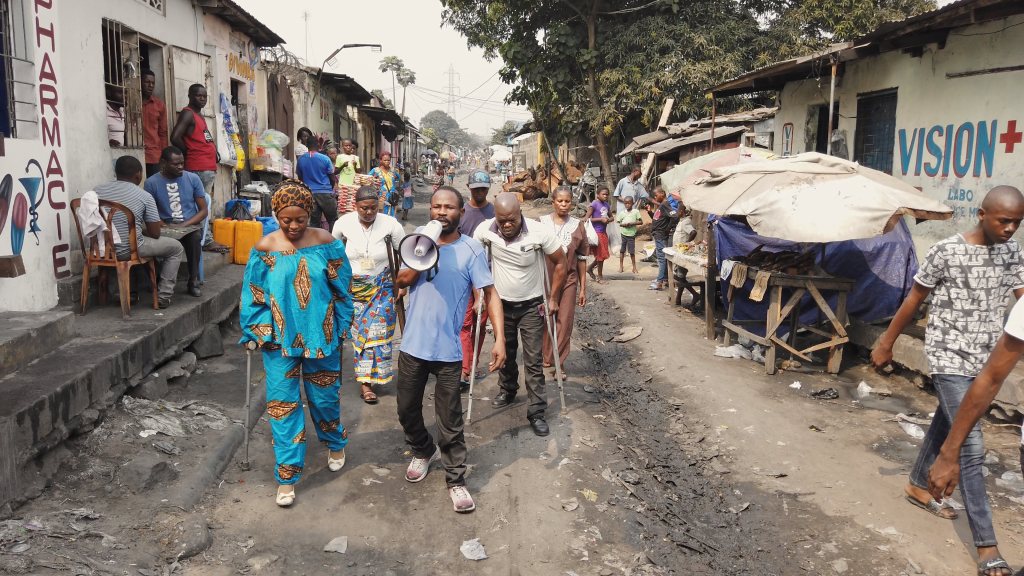
They have been abandoned and realise that memories can fade. The fact that this group of people set up their own association has meant that this war is remembered despite all attempts to erase it from collective memory. Because of these people, because of their association, every time they commemorate the war, everyone is obliged to remember it, acknowledge it and talk about it. For many people, and especially for the authorities and politicians, it’s embarrassing. That is why not only have these people been abandoned, but there has been a conscious effort to discourage them, and to shut down the association, which is the only one to perpetuate the memory of this tragedy. The crosses that had been planted on the mass grave where the people who died in the war are buried were even removed. The only remaining testimony is that of the victims. More and more of them have died and the few who remain continue to fight for their rights.
Is this a special case in Congolese history or has this always happened in the past?
It’s a general policy. If you go to Kinshasa today, you might expect that with all the things we have experienced, the crises, the wars, there would be commemorations or ceremonies. The atrocities suffered by the Congolese are not recognised by their own government. We know that we were at war, but we no longer know why, with whom or how many victims there were.
To communicate this message, you needed to go to Kinshasa by boat. Is this a trip you’ve taken often?
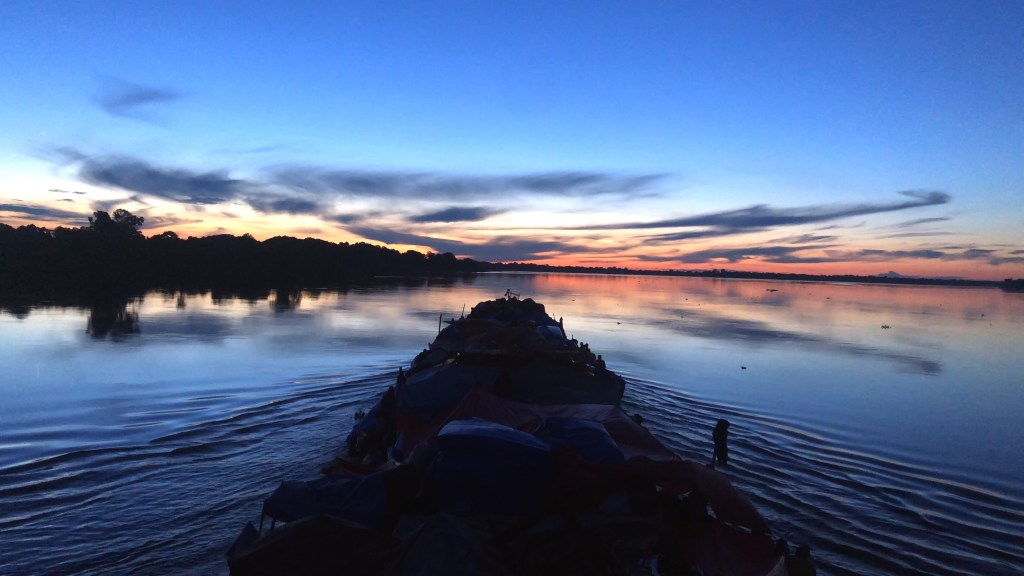
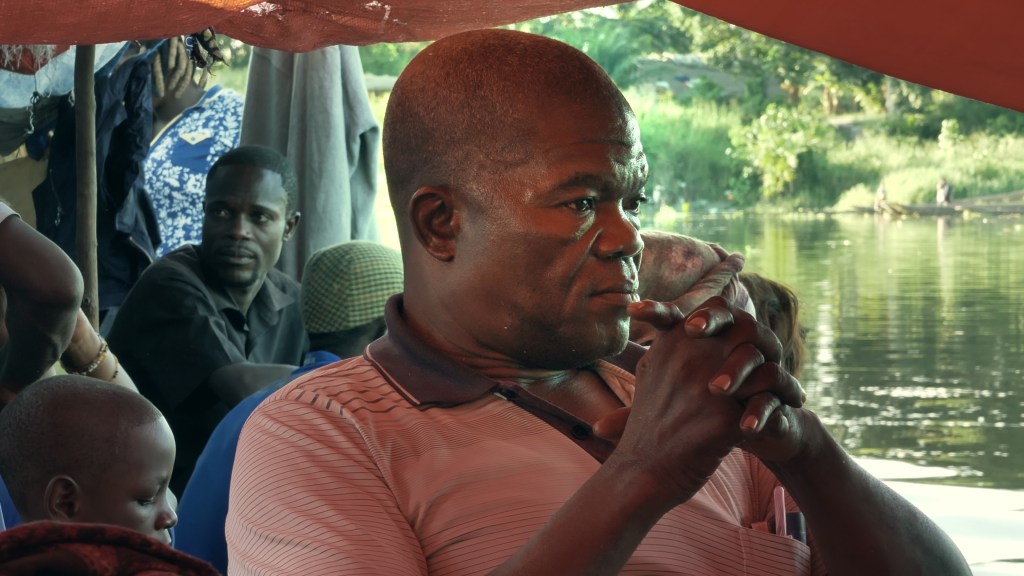
It was the first time. When I arrived, they told me it was the only transportation they could afford. Plane tickets were unaffordable. I had never made this trip by boat and I discovered, as the spectators will do, what it is like to travel between two Congolese cities today. These barges are open to the elements, the sun, the wind, and the rain. We even experienced a capsizing after two boats hit each other, and we were grounded on a sandbank.
How did you manage to film on the boat?
Many of the passengers didn’t like being filmed. Most of the scenes shot on the boat were shot with my phone. From the moment I realised that this was the only way to shoot, everything became easy, because I would charge the phone, I would screen the rushes and put everything into my computer at night. Except for a few drone scenes, everything was shot with my phone.
So you had taken a drone with you?
I had this fantasy about filming the Congo River and the landscapes, but I only had one opportunity to do so and I almost got left behind. I had to leave the boat, take a dugout canoe to fly the drone. The boat didn’t stop, the dugout had an engine problem and it took us two days before we were able to catch up with the boat at the next stopover.
Would you have liked to shoot with a real camera?
I would have had more composed, richer images. But at the same time, it was perhaps the only way to do it; I was immediately able to move around the boat, with the camera it was out of the question. Among the people on the boat were members of the secret service and the police, I would have been arrested before arriving in Kinshasa. With the telephone, I looked like an ordinary guy having fun filming people during the trip. This time on the boat, with all the difficulties, the extreme discomfort, puts the war victims on the same footing as the rest of the Congolese people. It was a revealing moment for them, they realised that other Congolese, who are not war victims themselves, are just as vulnerable as they are. There was no life-saving equipment on the boat. If the boat had sunk all the passengers, me included, would have died. It influenced their opinion by making them understand that, literally and figuratively, we’re all in the same boat.
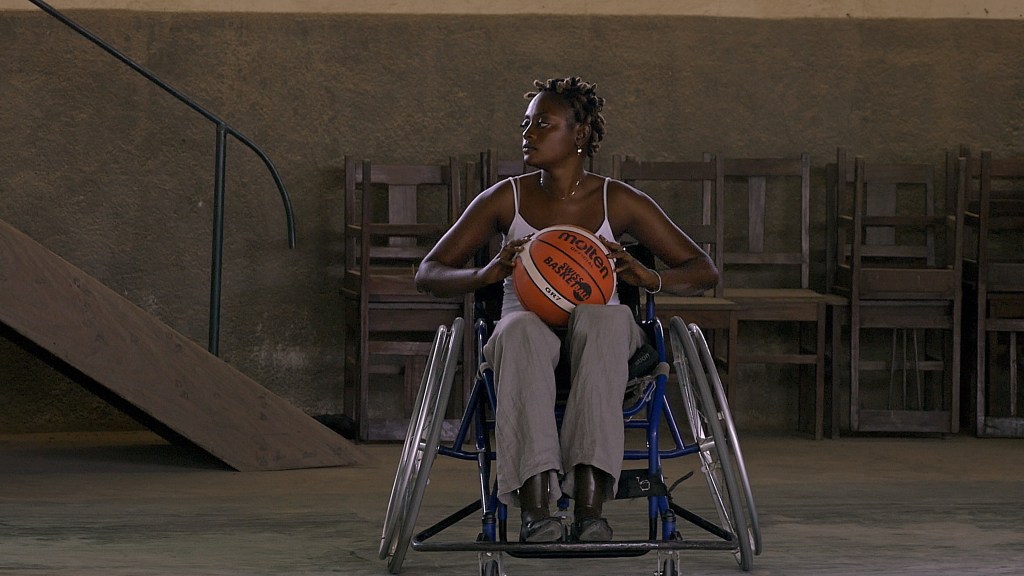
There’s this take of the lady who lost her arms and is giving a baby a spoonful of cassava…
The journey transformed them from being victims to people fighting for their cause. I adopted that angie to tell their story. It was the image that best expressed my intention: to film these people who are at the end of their tether, who have nothing more to lose, who continue to be human, who preserve a certain dignity and who have an indomitable desire to live.
How were these events situated in relation to the presidential campaign (at the end of 2018, which saw the victory of the opposition candidate Félix Tshisekedi over Joseph Kabila’s designated successor)?
Until we arrived in Kinshasa, we had no information about the campaign and the electoral process. On the Congo River, it’s like being outside the country, and it is as if time were suspended. What was happening in the big cities was not getting throug h to us. We only learned what happened during the month we spent on the boat when we arrived in Kinshasa just as the election was about to take place. I tried to tell events through the eyes of the characters I was filming.
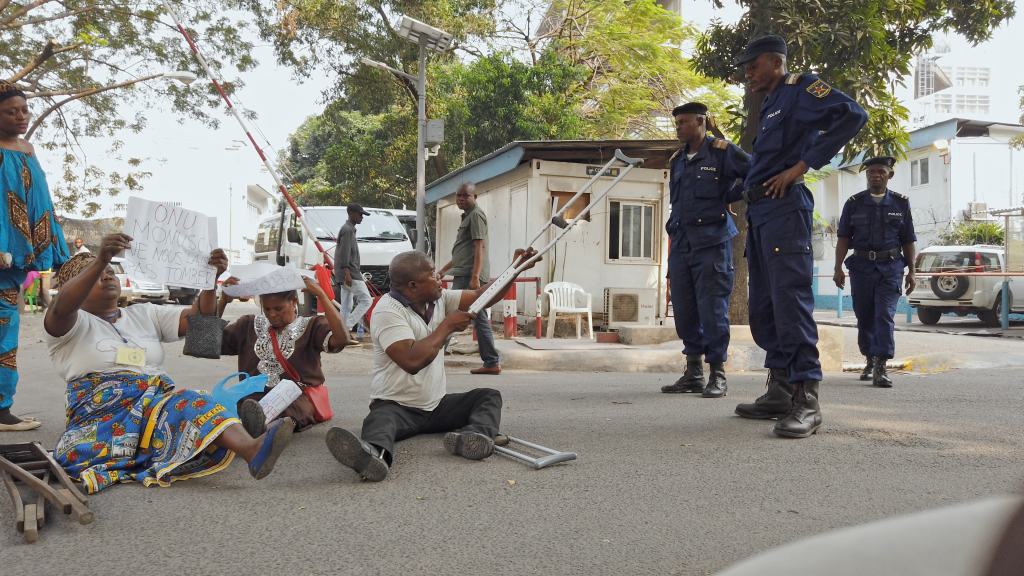
What’s terrible in this part of the film shot in Kinshasa is the indifference they are confronted with. Did they expect that?
There was a certain naivety on their part, which I found touching, when they decided to go to Kinshasa come what may. There was also something desperate in their approach. They knew it was going to be hard. Now, most of them are still in Kinshasa, despite the Covid pandemic, and others have come from Kisangani.










 True Story Blog
Leave a comment